previous
  • Colorful Selections for Shade
    Colorful Selections for Shade
  • Stylish Shady Containers
    Stylish Shady Containers
  • Plants that Spark!
    Plants that Spark!
  • Fragrant Plants for Pathways
    Fragrant Plants for Pathways
  • Thoughts From a Foreign Field
    Thoughts From a Foreign Field
  • Pretty in Pink
    Pretty in Pink
  • Save Money by Growing Your Own
    Save Money by Growing Your Own
  • Building a Compost Bin
    Building a Compost Bin
  • In Pursuit of the Perfect Potting Shed
    In Pursuit of the Perfect Potting Shed
  • Slideshow: Beautiful Clematis
    Slideshow: Beautiful Clematis
  • Designing with Curved Terraces
    Designing with Curved Terraces
  • Dwarf Citrus Trees
    Dwarf Citrus Trees
  • Plant an Easy-to-Water Strawberry Jar
    Plant an Easy-to-Water Strawberry Jar
  • Elephant's Ears
    Elephant's Ears
  • Containers as Focal Points
    Containers as Focal Points
  • 6 Tips for Weed Control
    6 Tips for Weed Control
  • Mulch for a Healthy Garden
    Mulch for a Healthy Garden
  • Comfortable Alfresco Dining
    Comfortable Alfresco Dining
  • NEW Video Series: There's a Better Way
    NEW Video Series: There's a Better Way
  • Garden Confidential: A Plant Walks into a Bar
    Garden Confidential: A Plant Walks into a Bar
  • Indeterminate or Determinate Tomatoes?
    Indeterminate or Determinate Tomatoes?
  • Make a Succulent Topiary
    Make a Succulent Topiary
  • Fast-Growing Trees for Impatient Gardeners
    Fast-Growing Trees for Impatient Gardeners
  • Homegrown / Homemade
    Homegrown / Homemade
  • Lawn Alternatives
    Lawn Alternatives
next

Genus Stachys (Betony, Hedge nettle, Woundwort)

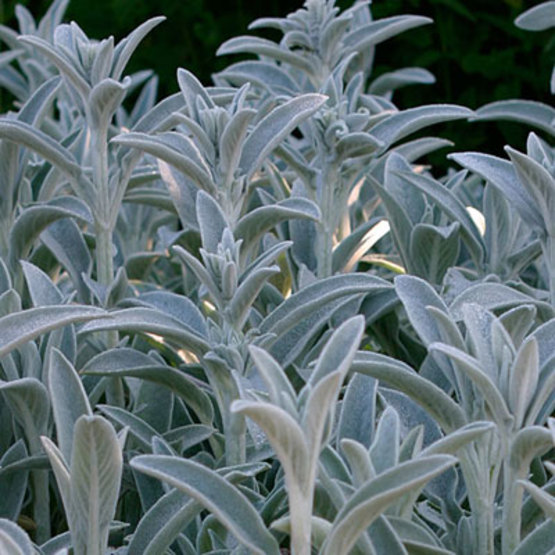
Stachys Stachys byzantina Photo/Illustration: Michelle Gervais
STAK-iss Common Name: Betony, Hedge nettle, Woundwort Synonyms: Betonica
Stachys is a large genus of about 300 species of annuals, perennials, and a few shrubs from varying habitats in north temperate regions. Opposite, wooly or hairy leaves grow on square stems. Tubular, 2-lipped flowers can be white, yellow, pink, red, or purple. They are borne in racemes or spikes and often attract insects. Taller species are useful in borders. Lower-growing species make good edging, ground cover, or rock-garden specimens.
Noteworthy characteristics: Leaves are hairy or wooly. Flowers often attract bees and butterflies.
Care: Needs well-drained, moderately fertile soil in full sun. Some species can tolerate part shade. Rock garden species need very well-drained, gritty soil and protection from winter moisture.
Propagation: Sow seed in a cold frame in spring or fall. Divide or remove rooted sections of perennials as growth begins in spring. Shrubs and subshrubs can be propagated from greenwood cuttings in early summer.
Problems: Prone to powdery mildew, rust, and leaf spots. Slugs and caterpillars can be problems as well.

Species, varieties and cultivars for genus Stachys

Stachys byzantina and cvs. Stachys byzantina and cvs.
(Lamb's ears, Woolly betony)
Be the first to rate this plant
Hardiness Zones: 1 2 3 4 5 6 7 8 9 10 11

This mat-forming perennial has rosettes of furry, silvery-gray leaves to 4 inches long. In summer, it bears gray spikes tipped with tiny, pink-purple or violet flowers. This plant crowds out weeds. 'Silver Carpet' is a non-flowering cultivar. 'Big Ears' has 8- to 12-inch-long, grayish-white felted, mid-green leaves.

Stachys byzantina 'Silky Fleece' Stachys byzantina 'Silky Fleece'
(Lambs' ears)
Be the first to rate this plant
Hardiness Zones: 1 2 3 4 5 6 7 8 9 10 11

This new cultivar of a treasured favorite is as cute as a button. With leaves about the size of a dime, 'Silky Fleece' has the same great soft, silky texture and silver color as other lambs' ears, just in a smaller package, growing to about 10 inches tall and wide. Lilac-plum flower spikes rise above the foliage from mid- to late summer. Grow it as edging, in containers, or in rock gardens.