
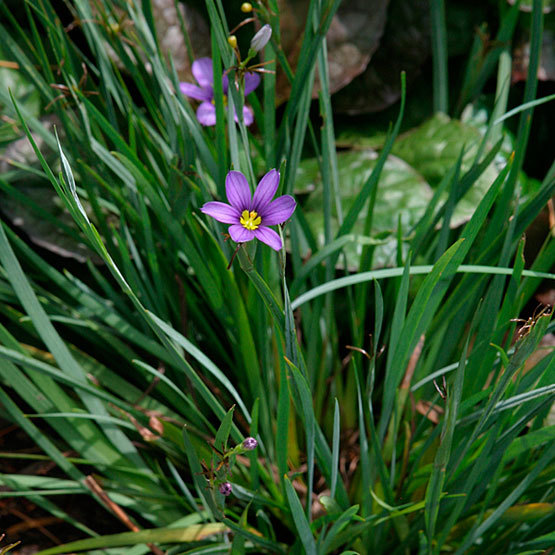
Genus Sisyrinchium

Sisyrinchium Sisyrinchium angustifolium Photo/Illustration: Melissa Lucas
sis-ih-RIN-kee-um
The genus Sisyrinchium is made up of 90 or so species of annuals and perennials that are native to North and South America. They are grown for their neat, clumping habit and small but colorful flowers in spring and summer. Flowers appear at the end of often winged stems and may be blue, yellow, mauve, white, or pink. Smaller species are useful in a rock garden, while larger ones are attractive in a herbaceous border. They may also be used in a cool greenhouse or alpine house.
Care: Grow in well-drained, neutral to slightly alkaline soil of poor to moderate fertility, in full sun. Will not tolerate excessive winter moisture.
Propagation: Sow seed in containers in a cold frame in autumn or early spring, or divide in spring.
Problems: Sometimes affected by rust, aphids, and spider mites.

Species, varieties and cultivars for genus Sisyrinchium

Sisyrinchium graminoides Sisyrinchium graminoides
(Blue-eyed grass)
(1 user review)
Hardiness Zones: 1 2 3 4 5 6 7 8 9 10 11

This clump forming, semi-evergreen, grass-like perennial blooms in summer, with a long succession of yellow-centered blue flowers. It grows to 20 inches high and 6 inches wide, and self-sows easily.

no image available Sisyrinchium striatum
(Satin flower)
Be the first to rate this plant
Hardiness Zones: 1 2 3 4 5 6 7 8 9 10 11

In early summer, these grass-like perennials produce multiple spikes of small, pale yellow blooms with dark yellow centers and faint purple stripes. The flowers rise above gray-green foliage. Native to open woods, meadows, and prairies of South America, these adaptable wildflowers tolerate a wide range of conditions and naturalize easily. The summer blossoms each open for just one day with the morning sun and close at dusk. Rarely do the blooms open on cloudy days. Plants grow to 3 feet tall and 10 inches wide.


