
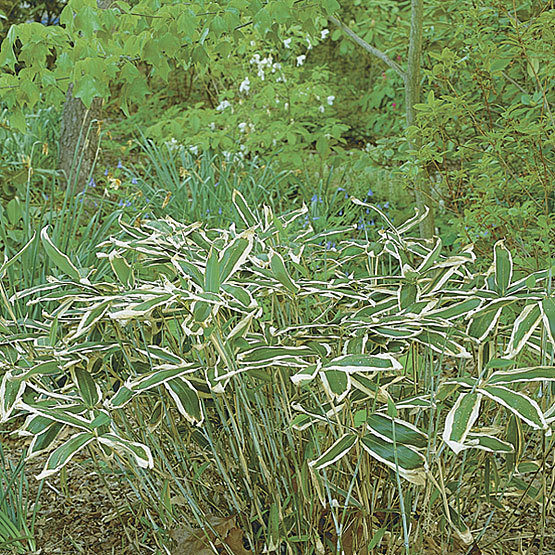
The genus Sasa is comprised of 40 to 50 species of small to medium-sized, running bamboos from Japan, Korea, and China. Stems are smooth and cylindrical, with bristly sheaths. Most species have large, thick, toothed, checkered leaves. Use Sasa species as a groundcover under trees, or as a hedge or screening. Plant in containers to control the running rhizomes. These plants tolerate full sun or deep shade.
Noteworthy CharacteristicsSmooth stems with bristly sheaths. Adaptable to a variety of growing conditions.
CareTolerates most soils except dry soil in full sun. Prefers fertile, organically rich, moist but well-drained soil. Can be grown in full sun to deep shade. Plant in containers and plunge into the soil to slow spread.
PropagationIn spring, divide or cut sections of the youngest rhizomes.
ProblemsGenerally trouble-free, but slugs may eat the emergent shoots.




