
previous
  • Slideshow: Beautiful Clematis
    Slideshow: Beautiful Clematis
  • Homegrown / Homemade
    Homegrown / Homemade
  • Fast-Growing Trees for Impatient Gardeners
    Fast-Growing Trees for Impatient Gardeners
  • Garden Confidential: A Plant Walks into a Bar
    Garden Confidential: A Plant Walks into a Bar
  • Containers as Focal Points
    Containers as Focal Points
  • Thoughts From a Foreign Field
    Thoughts From a Foreign Field
  • 6 Tips for Weed Control
    6 Tips for Weed Control
  • Pretty in Pink
    Pretty in Pink
  • Fine Gardening's Tip Off!
    Fine Gardening's Tip Off!
  • Colorful Selections for Shade
    Colorful Selections for Shade
  • Elephant's Ears
    Elephant's Ears
  • In Pursuit of the Perfect Potting Shed
    In Pursuit of the Perfect Potting Shed
  • Save Money by Growing Your Own
    Save Money by Growing Your Own
  • Designing with Curved Terraces
    Designing with Curved Terraces
  • Make a Succulent Topiary
    Make a Succulent Topiary
  • Dwarf Citrus Trees
    Dwarf Citrus Trees
  • Stylish Shady Containers
    Stylish Shady Containers
  • Fragrant Plants for Pathways
    Fragrant Plants for Pathways
  • Meet Our Mini-Magazines
    Meet Our Mini-Magazines
  • Indeterminate or Determinate Tomatoes?
    Indeterminate or Determinate Tomatoes?
  • Plant an Easy-to-Water Strawberry Jar
    Plant an Easy-to-Water Strawberry Jar
  • Mulch for a Healthy Garden
    Mulch for a Healthy Garden
  • Building a Compost Bin
    Building a Compost Bin
  • NEW Video Series: There's a Better Way
    NEW Video Series: There's a Better Way
  • Comfortable Alfresco Dining
    Comfortable Alfresco Dining
next

Genus Salix (Willow)

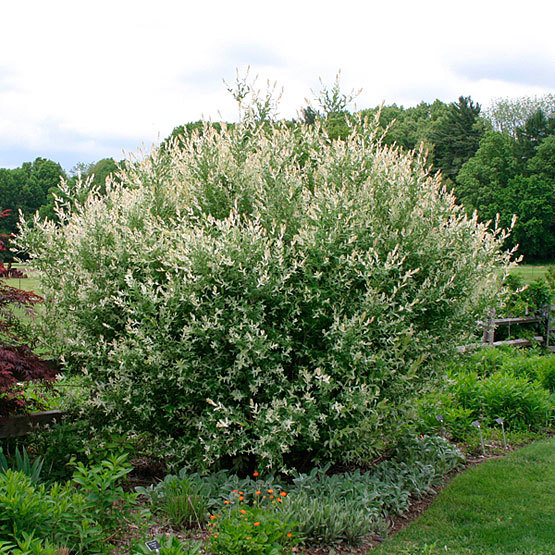
Salix Salix integra 'Hakuro-nishiki' Photo/Illustration: Daryl Beyers
SAY-liks Common Name: Willow
Salix is a large genus of 300 species of deciduous trees and shrubs found worldwide, except in Australia. Willows are normally dioceious; male plants have the most striking catkins. Leaves are simple and usually alternate, while flowers are very small. Some species are cultivated for their weeping habit, others for their colorful winter shoots, still others for their colorful catkins. Size ranges from very large to dwarf.
Noteworthy characteristics: Fuzzy catkins. Some species have colorful winter shoots or a weeping habit.
Care: Willows will grow in any deep, moist but well-drained soil in full sun.
Propagation: Most willows are easy to root. Take softwood cuttings in spring, or hardwood cuttings in winter.
Problems: Crown gall, canker, dieback, root knot nematode, powdery mildew, lesion nematode, mushroom root rot, tar spot, rust, twig blight, and heart rot can occur. Caterpillars, borers, aphids, and scale insects can attack plants.

Species, varieties and cultivars for genus Salix

Salix integra 'Hakuro-nishiki' Salix integra 'Hakuro-nishiki'
(Japanese variegated willow)
(1 user review)
Hardiness Zones: 1 2 3 4 5 6 7 8 9 10 11

The branches of this shrub are slightly upright, taking a softer fountain shape as they lengthen. The leaves are mottled in shades of white, pink, and green, maturing to green and cream. Stems turn a striking red.