
Genus Prunus (Almond, Cherry, Cherry laurel, Nectarine, Peach, Plum)

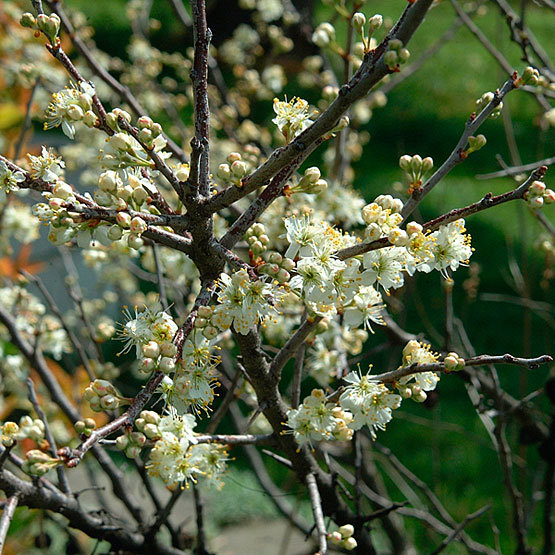
Prunus Prunus maritima Photo/Illustration: Jennifer Benner
PREW-nus Common Name: Almond, Cherry, Cherry laurel, Nectarine, Peach, Plum
Prunus is a genus of more than 200 species of trees and shrubs from many areas of the globe, occuring in woodlands, thickets, and on coasts and cliffs. Leaves are usually toothed, and the 5-petaled flowers are white, pink, or red. Round fruits follow and are deliciously edible in some species. Some species also have attractive, shiny bark and good autumn color. The fruit and foliage of some species are toxic. Grow as specimens, in a shrub border, as screening, or groundcover. There is a species for most garden uses.
Noteworthy characteristics: Showy flowers, fruit, and sometimes foliage. Often short-lived.
Care: Needs moist but well-drained soil of moderate fertility. Plant deciduous species in full sun and evergreens in full sun or part shade.
Propagation: Sow seed in containers outdoors in the fall. Using bottom heat, root greenwood cuttings of deciduous species in early summer and semi-ripe cuttings of evergreens in midsummer.
Problems: Prunus are susceptible to a wide variety of pests and diseases, including caterpillars, borers, scale insects, aphids, leaf hoppers, nematode, eriophyid mites, crown gall, mushroom root rot, dieback, lesions, fireblight, leaf curl, powdery mildew, and mosaic and ringspot viruses.


Species, varieties and cultivars for genus Prunus

no image available Prunus caroliniana
(Carolina cherry laurel)
Be the first to rate this plant
Hardiness Zones: 1 2 3 4 5 6 7 8 9 10 11

Carolina cherry laurel is an evergreen shrub or small tree with shiny green leaves and bowl-shaped, fragrant white flowers borne in dense clusters in spring. The fruit is lustrous, cherry-like, and black.

Prunus maritima Prunus maritima
(Beach plum)
Be the first to rate this plant
Hardiness Zones: 1 2 3 4 5 6 7 8 9 10 11

A suckering deciduous shrub with a dense, rounded form, beach plum has dull green leaves that are pale green beneath. Single or double white flowers bloom in mid-spring, maturing to edible purple fruit.

Prunus virginiana 'Schubert' Prunus virginiana 'Schubert'
('Schubert' choke cherry)
Be the first to rate this plant
Hardiness Zones: 1 2 3 4 5 6 7 8 9 10 11

'Schubert' choke cherry has a pyramidal form and vivid foliage that makes it a great focal point. Abundant, dark red-purple fruit follow the ephemeral, light pink flowers. The fruit is attractive to birds, so 'Schubert' choke cherry should not be planted near patios or walks due to the calling cards well-fed birds leave behind. Ask if the tree you buy is grafted onto nonsuckering rootstock; otherwise, suckers could pose problems down the road.


