
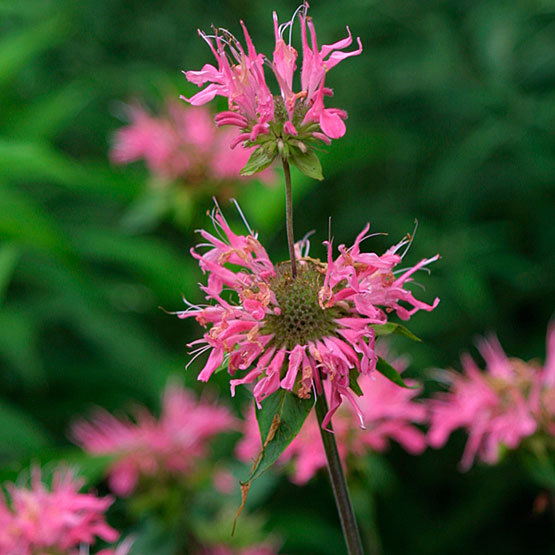
In the genus Monarda are a dozen or slightly more species of annuals and herbaceous perennials from North America’s dry scrub, prairies, and woodland. The square stems have opposite, aromatic leaves that are sometimes used medicinally or in teas. The tubular, lipped flowers bloom in high summer through early fall and can be white, pink, red, or violet. Plant Monarda in a border, meadow, or wildlife garden.
Noteworthy CharacteristicsAromatic foliage. Showy flowers that attract butterflies, bees, and hummingbirds. Long flowering.
CareBee balm needs moist but well-drained, humusy, fertile soil in full sun or very light shade. Keep moist in summer, but protect from excessive moisture in winter. Provide good air circulation.
PropagationDivide clumps or root basal cuttings in spring, or sow seed in a cold frame in spring or fall.
ProblemsPowdery mildew, rust, and leaf spot are common.




