Genus Miscanthus

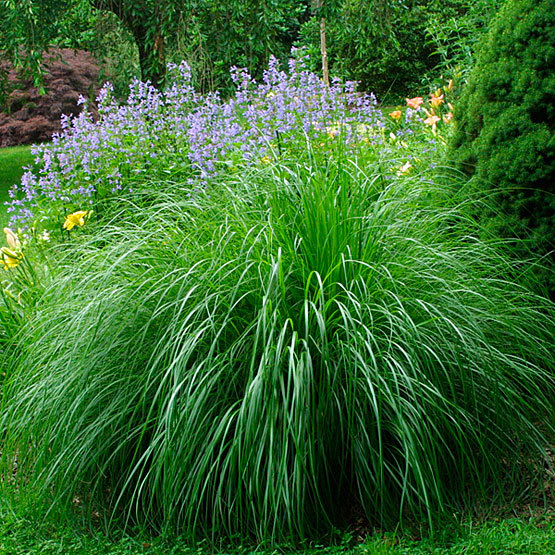
Miscanthus Miscanthus sinensis 'Morning Light' Photo/Illustration: Virginia Small
mis-KAN-thus
Miscanthus are perennial grasses from moist meadows and marshes from Africa to East Asia. From reed-like stems come green, blue, or purplish green leaves, sometimes with striping or banding. Flowerheads resemble tassels and are more numerous following long, hot summers. Fading growth and dried flowerheads provide fall and winter interest. Use as specimens, in borders, as screening, or at waterside.
Noteworthy characteristics: Attractive foliage and flowers, good autumn color in many cases, and structural form in winter provide a long season of interest. Flowerheads may be used as cut or dried flowers.
Care: Best in fertile, moist but well-drained soil in full sun, but plants tolerate most conditions except for excessive winter moisture. Cut to the ground by early spring.
Propagation: Sow seed in a cold frame in early spring. Divide in spring. Older clumps may become woody and difficult to divide.
Problems: Infrequent.

Species, varieties and cultivars for genus Miscanthus

Miscanthus sinensis ‘Gracillimus’ Miscanthus sinensis ‘Gracillimus’
(Eulalia grass, Maiden grass)
Be the first to rate this plant
Hardiness Zones: 1 2 3 4 5 6 7 8 9 10 11

This elegantly shaped grass has narrow leaves with white mid-ribs and a vase-like form to 6 feet tall. It shows bronze autumn color and can stand throughout winter to provide architectural interest. Tassel-like inflorescences appear in fall and can be used as cut or dried flowers.

Miscanthus sinensis ‘Morning Light’ Miscanthus sinensis ‘Morning Light’
(Eulalia grass)
(1 user review)
Hardiness Zones: 1 2 3 4 5 6 7 8 9 10 11

This beautiful grass has an "inner light" that emanates from the white midribs of its fine-textured leaf blades and the threads of white around their edges. A graceful shape usually between 5 and 6 feet tall, ‘Morning Light’, turns golden in November and fades to beige in winter.