
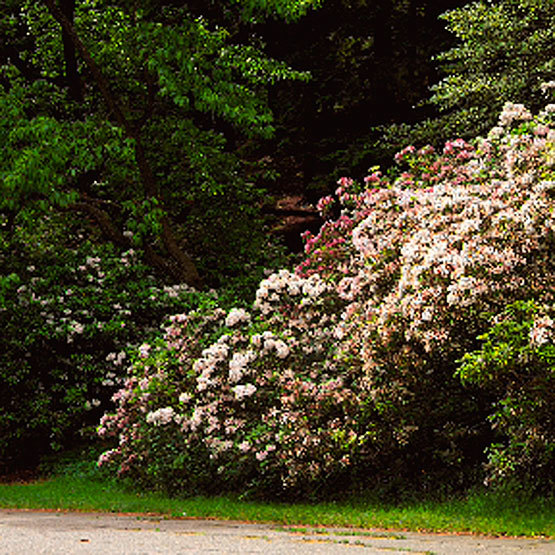
The genus Kalmia is comprised of seven species of evergreen shrubs from North America and Cuba, including our native mountain laurel. They are found in the wild in woods, swamps, and meadows. Kalmia have attractive leathery leaves and bear clusters of eye-catching, cup-shaped flowers in white or shades of red, purple, or pink. The flowers often have decorative markings as well. Kalmia need an acidic soil in the garden. Use them in a shrub border, woodland garden, or large rock garden.
Noteworthy CharacteristicsPlants have evergreen, leathery leaves and showy flower clusters. All parts are toxic if ingested.
CarePlants need acidic, moist soil with lots of humus. They can grow in full sun if soil is consistently moist, but they prefer partial shade. Mulch with leaf mold or pine needles.
PropagationStart seeds indoors in spring at 43° to 54°F. Take greenwood cuttings in late spring or semi-ripe cuttings in midsummer. Layer in late summer.
ProblemsWeevils, scale insects, whiteflies, lace bugs, borers, fungal leaf spots, blights, leaf gall, and powdery mildew can sometimes affect plants.




