
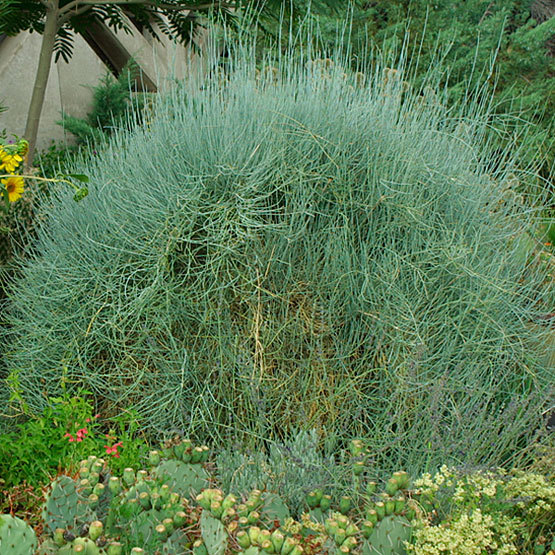
The genus Ephedra is comprised of 40 species of evergreen, usually dioecious, shrubs and climbers from dry and rocky areas. Their unique form is made up of a mass of thin, stick-like stems with scale-like leaves. The stems may be green, yellow-green, or blue-green. Ephedra are effective as a groundcover or in a border or rock garden.
Noteworthy CharacteristicsEphedra species have many medicinal and edible uses, especially as stimulants, but some species are toxic.
CareLikes poor to moderately fertile soil in full sun with excellent drainage.
PropagationSow seed of hardy species in containers in autumn and place in an open frame; sow tender species in spring at 55-61°F. Divide in spring or autumn.
ProblemsRust can occur.




