
previous
  • Containers as Focal Points
    Containers as Focal Points
  • Homegrown / Homemade
    Homegrown / Homemade
  • Mulch for a Healthy Garden
    Mulch for a Healthy Garden
  • Elephant's Ears
    Elephant's Ears
  • Garden Confidential: A Plant Walks into a Bar
    Garden Confidential: A Plant Walks into a Bar
  • Dwarf Citrus Trees
    Dwarf Citrus Trees
  • Lawn Alternatives
    Lawn Alternatives
  • Slideshow: Beautiful Clematis
    Slideshow: Beautiful Clematis
  • Building a Compost Bin
    Building a Compost Bin
  • NEW Video Series: There's a Better Way
    NEW Video Series: There's a Better Way
  • Stylish Shady Containers
    Stylish Shady Containers
  • Fragrant Plants for Pathways
    Fragrant Plants for Pathways
  • Make a Succulent Topiary
    Make a Succulent Topiary
  • In Pursuit of the Perfect Potting Shed
    In Pursuit of the Perfect Potting Shed
  • Plant an Easy-to-Water Strawberry Jar
    Plant an Easy-to-Water Strawberry Jar
  • Indeterminate or Determinate Tomatoes?
    Indeterminate or Determinate Tomatoes?
  • Plants that Spark!
    Plants that Spark!
  • Comfortable Alfresco Dining
    Comfortable Alfresco Dining
  • Save Money by Growing Your Own
    Save Money by Growing Your Own
  • Designing with Curved Terraces
    Designing with Curved Terraces
  • 6 Tips for Weed Control
    6 Tips for Weed Control
  • Fast-Growing Trees for Impatient Gardeners
    Fast-Growing Trees for Impatient Gardeners
  • Thoughts From a Foreign Field
    Thoughts From a Foreign Field
  • Colorful Selections for Shade
    Colorful Selections for Shade
  • Pretty in Pink
    Pretty in Pink
next

Genus Cuphea

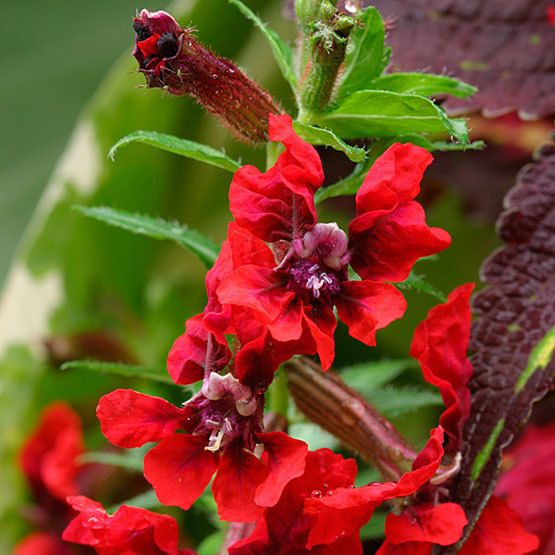
Cuphea Cuphea llavea 'Flamenco Samba' Photo/Illustration: Jennifer Benner
KOO-fee-ah
A large genus of at least 250 species of annuals, perennials, and shrubs from Central and South America, as well as the southeastern U.S. They are grown for their tubular, irregularly shaped flowers which have a long blooming season. Cuphea can be grown as annuals where not hardy. Use as bedding or in a border.
Noteworthy characteristics: Long blooming, tubular flowers. Sticky foliage. Plants often attract hummingbirds and butterflies.
Care: In the garden, plant in full sun or partial shade and moderately fertile, well-drained soil. Cuphea benefit from a protected site. They are fairly frost tender. Prune in spring. Indoors, grow in full light and moderate humidity. Protect from strong sun. Tip prune for bushy growth.
Propagation: Start from seed indoors at 55-61°F in early spring or sow in the garden in late spring. Perennials may be propagated by division or cuttings in late spring using bottom heat.
Problems: Root rot, stem galls, dieback, powdery mildew, and leaf spots are fairly common. Whiteflies and aphids can also be problems.


Species, varieties and cultivars for genus Cuphea

Cuphea llavea Flamenco Samba™ Cuphea llavea Flamenco Samba™
(Bat-faced cuphea)
Be the first to rate this plant
Hardiness Zones: 1 2 3 4 5 6 7 8 9 10 11

This bold-colored cuphea is a compact, mounding subshrub covered with dark-centered, cherry red blooms centered with a deep purple throat and slightly ruffled petal edges. Flowers are larger than those of the species. This sun-loving plant can reach up to 3 feet in height and width.

Cuphea llavea Totally Tempted™ Cuphea llavea Totally Tempted™
(Totally Tempted™ cuphea)
Be the first to rate this plant
Hardiness Zones: 1 2 3 4 5 6 7 8 9 10 11

Totally Tempted™ cuphea has nonstop, bright red summer flowers that don't need deadheading. It doesn't mind summer heat and has a more compact habit than most cultivars in this species, growing to just a foot tall and a little wider.

no image available Cuphea micropetala
(Cigar plant)
Be the first to rate this plant
Hardiness Zones: 1 2 3 4 5 6 7 8 9 10 11

This tireless bloomer is best known for its small, tubular flowers, each colored in vivid orange hues and tipped with white, like the ash on a glowing cigar. Each plant creates a mass of slender branches with lance-shaped, mid-green leaves. At the tip of the branches are fireworks bursts of unusual cigarlike flowers, each 1-1/4 inches long and softly hairy. Though the flowers look orangey, they are actually colored red and shaded with green-yellow.


