previous
  • Garden Catalog Collector
    Garden Catalog Collector
  • Video: Make a Straw-Bale Garden
    Video: Make a Straw-Bale Garden
  • How to Start a Vegetable Garden
    How to Start a Vegetable Garden
  • Bold and Beautiful Zinnias
    Bold and Beautiful Zinnias
  • Off With Their Heads: Deadheading Perennials
    Off With Their Heads: Deadheading Perennials
  • A gardener's checklist for early summer
    A gardener's checklist for early summer
  • Free Download: Rose Pruning and Bed Prep
    Free Download: Rose Pruning and Bed Prep
  • Backyard Makeover Game
    Backyard Makeover Game
  • Make Your Own Hypertufa Container
    Make Your Own Hypertufa Container
  • Building a Compost Bin
    Building a Compost Bin
  • How to Grow Raspberries
    How to Grow Raspberries
  • Soil Testing is Worth the Effort
    Soil Testing is Worth the Effort
  • Variegated Plants Create Drama
    Variegated Plants Create Drama
  • 25 Robust Summer Bloomers
    25 Robust Summer Bloomers
  • Big Flowers from Bigleaf Hydrangeas
    Big Flowers from Bigleaf Hydrangeas
  • 10 Perennials Easily Grown from Seed
    10 Perennials Easily Grown from Seed
  • Friendly Ways to Battle Garden Pests
    Friendly Ways to Battle Garden Pests
  • Perfect Edges for Your Beds and Borders
    Perfect Edges for Your Beds and Borders
  • 15 Deer-Resistant Plants
    15 Deer-Resistant Plants
  • The Only Shrubs You Need to Grow
    The Only Shrubs You Need to Grow
  • Viburnums are Versatile Shrubs
    Viburnums are Versatile Shrubs
  • All About Starting Seeds
    All About Starting Seeds
  • Lilacs: Time for a Fresh Look
    Lilacs: Time for a Fresh Look
  • Enchanting Japanese Maples
    Enchanting Japanese Maples
  • Find the Perfect Tomato
    Find the Perfect Tomato
next

Genus Brassica

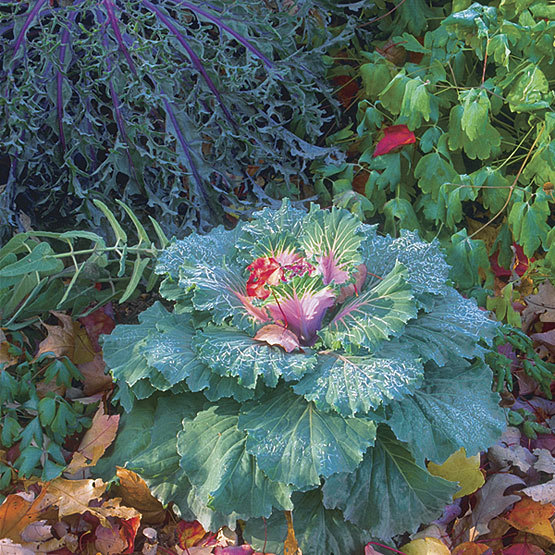
Brassica Brassica oleracea Photo/Illustration: Chris Curless
BRASS-ih-kah
The genus Brassica encompasses 30 or so species of annuals, biennials, perennials, and subshrubs from the Mediterranean region to Asia. Most have taproots and lobed, hairless, glaucous leaves. Flowers are borne in racemes and are cross-shaped. They are followed by long, narrow fruits with beaks. Most Brassica species are grown in the vegetable garden, but others are very decorative, such as the ornamental cabbages, and are used in bedding or in a border.
Noteworthy characteristics: This genus includes cabbage, Brussels sprouts, cauliflower, broccoli, and turnip.
Care: Grow in full sun in a fertile, well-drained soil that is preferably rich in lime.
Propagation: Sow seeds where they are to grow in spring or start indoors in early spring.
Problems: Leaf miners, caterpillars, aphids, harlequin bugs, root maggots, nematodes, cabbage white butterfly, flea beetles. Brassica are also susceptible to black leg, white rust, black leaf spot, downy and powdery mildews, damping off, white mold, club root, and root knot nematodes. Soils deficient in magnesium, boron, or potassium can affect plants.

Species, varieties and cultivars for genus Brassica

Brassica oleracea Brassica oleracea
(Ornamental cabbage, Ornamental kale)
(2 user reviews)
Hardiness Zones: 1 2 3 4 5 6 7 8 9 10 11

Rosettes of cabbage foliage are grown as annuals for fall and winter interest. Color intensifies in cooler temperatures (below 50°F). Good for bedding and containers.