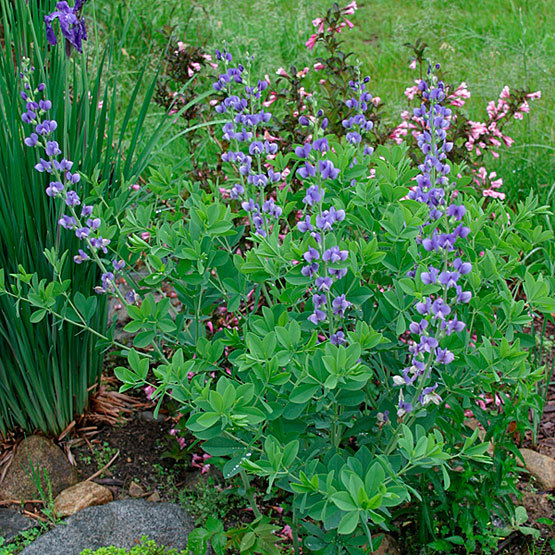
Genus Baptisia (False indigo, Wild indigo)

Baptisia Baptisia australis Photo/Illustration: Steve Aitken
bap-TEE-zsah Common Name: False indigo, Wild indigo
The genus Baptisia is comprised of more than 20 species of perennials from dry woodland and grassland in the eastern and southern United States. Leaves are fully divided and palmate. Pea-like flowers bloom on tall, branched stems and are followed by large seedpods that are often inflated and rattle in a breeze. Some species can be sheared into neat shapes for a more formal look. Baptisia works well in borders, wild gardens, or on hills and banks.
Noteworthy characteristics: Pea-like flowers and large seed pods.
Care: Prefers sandy, porous soil in full sun. Deadhead after flowering, although the often black seedpods on some species are attractive and rattle in the wind.
Propagation: As soon as seeds are ripe, sow them in containers in a cold frame. Plants may be divided in early spring.
Problems: Weevils may eat the seeds. Fungal leaf spots, powdery mildew, and rust can affect plants.

Species, varieties and cultivars for genus Baptisia

Baptisia 'Carolina Moonlight' Baptisia 'Carolina Moonlight'
('Carolina Moonlight' false indigo)
Be the first to rate this plant
Hardiness Zones: 1 2 3 4 5 6 7 8 9 10 11

This spectacular perennial hybrid has 18-inch-tall spires of buttery yellow flowers in late spring and beautiful blue-green foliage throughout summer. Tough, exceptionally drought tolerant, and extremely long-lived, it's the southern substitute for the much sought-after lupine. 'Carolina Moonlight' has an adaptable, easy-to-grow nature and makes a great companion for other rugged plants such as ornamental grasses.

no image available Baptisia 'Chocolate Chip'
(Chocolate Chip false indigo)
Be the first to rate this plant
Hardiness Zones: 1 2 3 4 5 6 7 8 9 10 11

This perennial produces milk chocolate-colored flowering buds that open in spring with golden yellow petals over blue-green foliage.

Baptisia × variicolor Twilite Prairieblues™ Baptisia × variicolor Twilite Prairieblues™
Be the first to rate this plant
Hardiness Zones: 1 2 3 4 5 6 7 8 9 10 11

This amazing baptisia is a cross between B. australis, the most common blue variety, and B. sphaerocarpa, a vivid, buttery yellow bloomer. The result is late spring or early summer, pea like, violet-purple flowers with dramatic yellow keels. Like other baptisias, Twilite Prairieblues™ is a member of the legume family and fixes nitrogen in the soil. It is long-lived, tough as nails, and drought resistant, but it's a little slow at the start. If you're patient, you'll have a full-blown baptisia by the third or fourth gardening season. When not in bloom, the distinctive, trifoliate leaves take center stage with their lovely blue-green color, which is especially noticeable in spring. For the best effect, give this plant a spot at the back of a border.

Baptisia australis Baptisia australis
(False blue indigo, Plains false indigo)
(1 user review)
Hardiness Zones: 1 2 3 4 5 6 7 8 9 10 11

False blue indigo's spikes of clear blue flowers in late spring can nearly carry a border by themselves. They also make great cut flowers. Large, inflated nearly black seed pods set in after flowering, giving this plant another interesting element. It is low maintenance and will look great in any natural or informal setting.