
previous
  • Comfortable Alfresco Dining
    Comfortable Alfresco Dining
  • Stylish Shady Containers
    Stylish Shady Containers
  • Indeterminate or Determinate Tomatoes?
    Indeterminate or Determinate Tomatoes?
  • Fragrant Plants for Pathways
    Fragrant Plants for Pathways
  • NEW Video Series: There's a Better Way
    NEW Video Series: There's a Better Way
  • Dwarf Citrus Trees
    Dwarf Citrus Trees
  • Make a Succulent Topiary
    Make a Succulent Topiary
  • Elephant's Ears
    Elephant's Ears
  • Homegrown / Homemade
    Homegrown / Homemade
  • Slideshow: Beautiful Clematis
    Slideshow: Beautiful Clematis
  • Lawn Alternatives
    Lawn Alternatives
  • In Pursuit of the Perfect Potting Shed
    In Pursuit of the Perfect Potting Shed
  • Mulch for a Healthy Garden
    Mulch for a Healthy Garden
  • Plants that Spark!
    Plants that Spark!
  • 6 Tips for Weed Control
    6 Tips for Weed Control
  • Designing with Curved Terraces
    Designing with Curved Terraces
  • Save Money by Growing Your Own
    Save Money by Growing Your Own
  • Fast-Growing Trees for Impatient Gardeners
    Fast-Growing Trees for Impatient Gardeners
  • Pretty in Pink
    Pretty in Pink
  • Colorful Selections for Shade
    Colorful Selections for Shade
  • Thoughts From a Foreign Field
    Thoughts From a Foreign Field
  • Building a Compost Bin
    Building a Compost Bin
  • Plant an Easy-to-Water Strawberry Jar
    Plant an Easy-to-Water Strawberry Jar
  • Garden Confidential: A Plant Walks into a Bar
    Garden Confidential: A Plant Walks into a Bar
  • Containers as Focal Points
    Containers as Focal Points
next

Genus Aesculus (Buckeye, Horse chestnut)

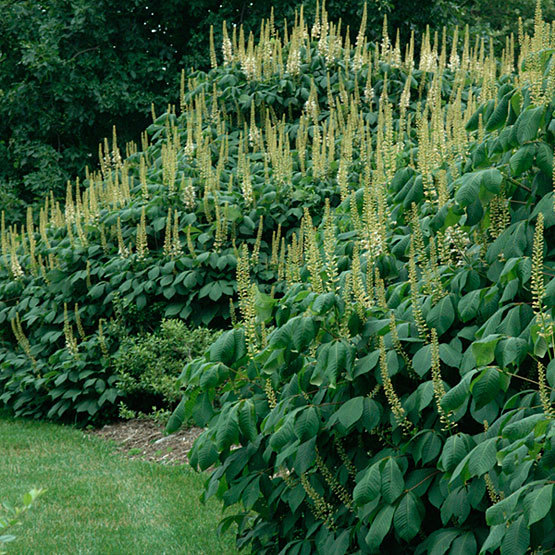
Aesculus Aesculus parviflora Photo/Illustration: Jennifer Benner
ESS-kew-lus Common Name: Buckeye, Horse chestnut
Plants in the genus Aesculus are noted for their large, palmate leaves and showy white or reddish flowers. Large upright panicles of flowers with prominent stamens are borne in late spring to early summer, followed by smooth-skinned fruit with one to two seeds.
Noteworthy characteristics: Opposite, palmate dark green leaves turn yellow or red in autumn.
Care: Grow in fertile soil in sun to part shade. Needs minimal pruning.
Propagation: Graft in late winter or bud in summer. Propagate from suckers where applicable.
Problems: Prone to canker, leaf blotch, scale, and Japanese beetles. Anthracnose, rust, and powdery mildew can occur.


Species, varieties and cultivars for genus Aesculus

Aesculus parviflora Aesculus parviflora
(Bottlebrush buckeye)
(1 user review)
Hardiness Zones: 1 2 3 4 5 6 7 8 9 10 11

Large palmate-leaved shrub with showy white 12-inch-tall blooms in summer, followed by smooth-skinned fruit. Leaves emerge bronze and turn yellow in autumn.

Aesculus parviflora var. serotina 'Rogers' Aesculus parviflora var. serotina 'Rogers'
('Rogers' bottlebrush buckeye)
Be the first to rate this plant
Hardiness Zones: 1 2 3 4 5 6 7 8 9 10 11

This is a suckering, deciduous shrub grown for it's white, bottlebrush-like flowers in early summer. The flowers are considerably longer than those of the species at up to 30 inches, and emerge a couple of weeks later. The shrub grows to 10 feet tall and 15 feet wide and prefers full sun to partial shade and moist, well-drained soil. Its layers of broad leaves turn gold in fall.Suitable for a medium to large garden.

no image available Aesculus pavia
(Red buckeye)
(1 user review)
Hardiness Zones: 1 2 3 4 5 6 7 8 9 10 11

This conical shrub to small tree has palmate leaves and bears red (sometimes yellow-marked) flowers in 6-inch panicles in summer, followed by smooth-skinned fruit. The flowers attract hummingbirds.


