previous
  • Soil Testing is Worth the Effort
    Soil Testing is Worth the Effort
  • 15 Deer-Resistant Plants
    15 Deer-Resistant Plants
  • Find the Perfect Tomato
    Find the Perfect Tomato
  • Enchanting Japanese Maples
    Enchanting Japanese Maples
  • Bold and Beautiful Zinnias
    Bold and Beautiful Zinnias
  • Garden Catalog Collector
    Garden Catalog Collector
  • Friendly Ways to Battle Garden Pests
    Friendly Ways to Battle Garden Pests
  • 10 Perennials Easily Grown from Seed
    10 Perennials Easily Grown from Seed
  • Off With Their Heads: Deadheading Perennials
    Off With Their Heads: Deadheading Perennials
  • Viburnums are Versatile Shrubs
    Viburnums are Versatile Shrubs
  • Video: Make a Straw-Bale Garden
    Video: Make a Straw-Bale Garden
  • Building a Compost Bin
    Building a Compost Bin
  • The Only Shrubs You Need to Grow
    The Only Shrubs You Need to Grow
  • 25 Robust Summer Bloomers
    25 Robust Summer Bloomers
  • How to Grow Raspberries
    How to Grow Raspberries
  • Backyard Makeover Game
    Backyard Makeover Game
  • Lilacs: Time for a Fresh Look
    Lilacs: Time for a Fresh Look
  • How to Start a Vegetable Garden
    How to Start a Vegetable Garden
  • Make Your Own Hypertufa Container
    Make Your Own Hypertufa Container
  • Free Download: Rose Pruning and Bed Prep
    Free Download: Rose Pruning and Bed Prep
  • A gardener's checklist for early summer
    A gardener's checklist for early summer
  • All About Starting Seeds
    All About Starting Seeds
  • Big Flowers from Bigleaf Hydrangeas
    Big Flowers from Bigleaf Hydrangeas
  • Variegated Plants Create Drama
    Variegated Plants Create Drama
  • Perfect Edges for Your Beds and Borders
    Perfect Edges for Your Beds and Borders
next

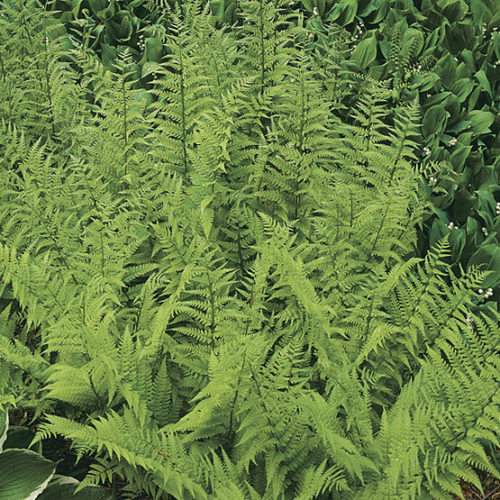
Dryopteris celsa (Log fern)

Dryopteris celsa Photo/Illustration: Steve Silk


Be the first to rate this plant

Plant Showcase - from our advertisers


Hardiness Zones: 1 2 3 4 5 6 7 8 9 10 11
Botanical Name: Dryopteris celsa dry-OP-ter-iss SELL-sah Common Name: Log fern Genus: Dryopteris
This fern is a tall plant with foliage that looks good all summer long. Upright deep-green fronds are semi-evergreen but topple over in fall. May reach 3 feet.
Noteworthy characteristics: Looks great with most herbaceous plants.
Care: Grow in moist soil and partial to full shade in a protected site.
Propagation: Sow spores at 59°F when ripe. Divide plants in spring or autumn.
Problems: Rust, leaf gall, and fungal spots can occur.
Height 1 ft. to 3 ft.
Light Part Shade Only
Moisture Medium Moisture
Maintenance Low
Characteristics Showy Foliage
Foliage Color Evergreen
Uses Beds and Borders
Style Woodland Garden
Seasonal Interest Spring Interest, Summer Interest, Fall Interest
Type Fern

Plants you might also like

Dryopteris erythrosora Dryopteris erythrosora
(Autumn fern, Pink shield fern)
Be the first to rate this plant
Hardiness Zones: 1 2 3 4 5 6 7 8 9 10 11

In spring, autumn fern’s fronds unfurl a copper red, then turn to bronze, and finally become a shiny dark green. The fronds are upright and lend a lacy texture to the woodland garden. This fern is usually deciduous.

Athyrium filix-femina ‘Vernoniae Cristatum’ Athyrium filix-femina ‘Vernoniae Cristatum’
(Crested lady fern)
Be the first to rate this plant
Hardiness Zones: 1 2 3 4 5 6 7 8 9 10 11

This small fern is popular and easy to grow. It's suited to the front edge of a border. This cultivar has arching, ruffled fronds that divide into tassels at the ends.

Dryopteris × australis Dryopteris × australis
(Dixie wood fern)
Be the first to rate this plant
Hardiness Zones: 1 2 3 4 5 6 7 8 9 10 11

This dramatic fern diplays 4-foot-tall arching fronds that form impressive clumps with age. It is a hybrid of two native ferns and makes a wonderful groundcover.

Pteridium aquilinum Pteridium aquilinum
(Bracken)
Be the first to rate this plant
Hardiness Zones: 1 2 3 4 5 6 7 8 9 10 11

A native fern with triangular-shaped, stiff, upright fronds that can tolerate dry soil and full sun. Bracken can make very large colonies and are found in a variety of habitats ranging from dry and wet forests to meadows and bogs. They grow up to 4.5 feet tall.

Athyrium 'Ghost' Athyrium 'Ghost'
(Ghost fern)
Be the first to rate this plant
Hardiness Zones: 1 2 3 4 5 6 7 8 9 10 11

Here's a fern with an upright habit and silvery fronds that give it a ghostly look, hence the name. Emerging new fronds have a shimmering whitish color that darkens slowly to a silvery green with burgundy accents. 'Ghost' spreads slowly by shallow rhizomes, eventuallly becoming an excellent ground cover