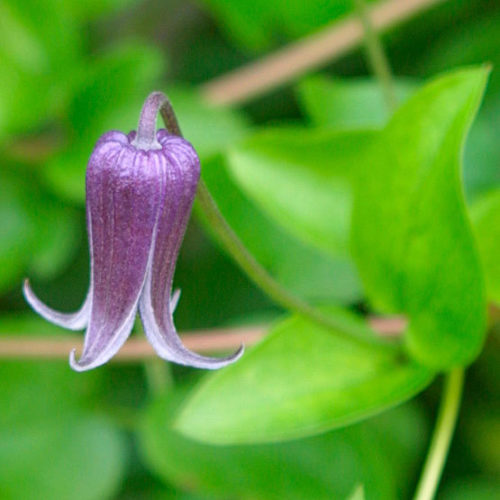
Clematis crispa (Marsh clematis, Blue jasmine, Curly clematis)

Clematis crispa Photo/Illustration: Michelle Gervais


Be the first to rate this plant

Hardiness Zones: 1 2 3 4 5 6 7 8 9 10 11
Botanical Name: Clematis crispa KLEM-ah-tiss KRIS-pah Common Name: Marsh clematis, Blue jasmine, Curly clematis Genus: Clematis
A deciduous climber native to the southeastern United States, Clematis crispa bears lavender-blue, bell-shaped flowers with curly edges in summer. Its blooms are not profuse, but their elegant shape makes this plant a good choice for trellises, growing through shrubs, or planting in damp areas. The flowers are slightly fragrant and are followed by attractive seedheads. It also makes an unusual cut flower.
Noteworthy characteristics: Later flowering than most other clematis, and likes moister soils. Native to the southeastern U.S.
Care: Provide consistently moist soil and full sun or partial shade. Clematis like their roots to be shaded. Plant root ball 3 inches below soil surface. Prune in early spring before growth begins by cutting back all the previous years stems to a pair of strong buds, 6 to 8 inches above the ground.
Propagation: Sow seed in a cold frame as soon as ripe. Divide or take cuttings in spring. Root semi-ripe cuttings in early summer. Layer in late winter or early spring.
Problems: Scale insects, whiteflies, earwigs, and aphids can occur. This species is susceptible to wilt, which can be fatal.
Height 6 ft. to 10 ft.
Spread 1 ft. to 3 ft.
Growth Habit Runs
Growth Pace Moderate Grower
Light Full Sun to Part Shade
Moisture Medium to Wet
Maintenance Moderate
Characteristics Fragrant Flowers; Native; Showy Flowers; Showy Seed Heads
Bloom Time Summer
Flower Color Blue Flower; Purple/ Lavender Flower; White Flower
Uses Beds and Borders, Trellis, Waterside
Seasonal Interest Summer Interest
Type Perennials,Vines

Plants you might also like

Clematis tangutica 'Golden Tiara' Clematis tangutica 'Golden Tiara'
(Russian virgin's bower)
Be the first to rate this plant
Hardiness Zones: 1 2 3 4 5 6 7 8 9 10 11

'Golden Tiara' is a vigorous, late-flowering climbing vine to 15 or 20 feet tall with intense golden-yellow, bell-shaped flowers that eventually fully open to reveal crimson filaments. It blooms profusely from midsummer to late fall. The seedheads are fluffy and attractive in their own right. Native to western China.

Asarina scandens Asarina scandens
(Figwort, Creeping snapdragon)
(1 user review)

A half-hardy perennial, this sophisticated climber grows to 8 feet tall. It has a profuse show of 1.5-inch indigo, violet, pink, or white flowers. It's great for the cold greenhouse or conservatory, and will often bloom until the end of the year unless there is a hard frost.

Clematis integrifolia Clematis integrifolia
(Solitary clematis)
Be the first to rate this plant
Hardiness Zones: 1 2 3 4 5 6 7 8 9 10 11

Clematis integrifolia is a herbaceous, woody-based, upright, non-climbing perennial with a dense and somewhat sprawling habit. It bears solitary, nodding, bell-shaped flowers with slightly twisted violet to blue sepals and creamy white anthers from May to July. Sporadic blooming sometimes occurs throughout the summer. Blossoms mature to attractive, feathery, silver-green, or silvery brown seed heads.

Clematis ‘Nelly Moser’ Clematis ‘Nelly Moser’
(1 user review)
Hardiness Zones: 1 2 3 4 5 6 7 8 9 10 11

'Nellie Moser' is easy to grow, producing large, flat flowers 6 to 8 inches in diameter with distinctive, gleaming lilac bars on each petal. This clematis blooms from May to late June, with a second, less profuse bloom in mid-August. Planted in a shady spot, the cheery pink-and-mauve-striped blossoms last for weeks instead of days.

Melampodium leucanthum Melampodium leucanthum
(Blackfoot daisy)
Be the first to rate this plant
Hardiness Zones: 1 2 3 4 5 6 7 8 9 10 11

A native perennial shrub that grows to about 2 feet tall and wide and covers itself the whole season with honey-scented, white and yellow daisy flowers. The foliage is typical of the aster family. Plant en masse in a well-drained border or use in a rock garden. Blackfoot daisy can be short-lived.