Baptisia × variicolor Twilite Prairieblues™

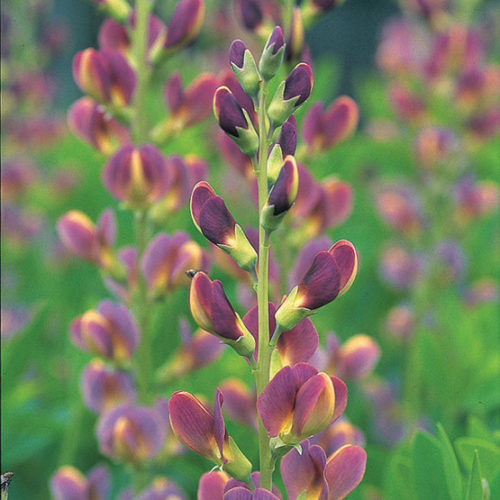
Baptisia × variicolor Twilite Prairieblues™ Photo/Illustration: Courtesy of Stephanie Cohen


Be the first to rate this plant

Hardiness Zones: 1 2 3 4 5 6 7 8 9 10 11
Botanical Name: Baptisia × variicolor Twilite Prairieblues™ bap-TEE-zsah ex var-EYE-ih-kul-or Genus: Baptisia
This amazing baptisia is a cross between B. australis, the most common blue variety, and B. sphaerocarpa, a vivid, buttery yellow bloomer. The result is late spring or early summer, pea like, violet-purple flowers with dramatic yellow keels. Like other baptisias, Twilite Prairieblues™ is a member of the legume family and fixes nitrogen in the soil. It is long-lived, tough as nails, and drought resistant, but it's a little slow at the start. If you're patient, you'll have a full-blown baptisia by the third or fourth gardening season. When not in bloom, the distinctive, trifoliate leaves take center stage with their lovely blue-green color, which is especially noticeable in spring. For the best effect, give this plant a spot at the back of a border.
Noteworthy characteristics: Unique bicolor flowers on a long-lived, tough plant with attractive foliage.
Care: Provide full sun and most any well-drained soil. Baptisias have an easy-to-snap taproot and resent being transplanted. Decide carefully where to put this plant, and leave it alone for at least four to five years. If you do transplant it, treat it like a shrub and move it with the soil intact in a large root-ball. The plant can be cut back after flowering to encourage a flush of new blue-green growth. You will lose the ornamental black seedpods, however, which persist into fall. Alternatively, wait until after the first hard frost to cut back.
Height 3 ft. to 6 ft.
Spread 3 ft. to 6 ft.
Growth Habit Clumps
Growth Pace Slow Grower
Light Full Sun Only
Moisture Dry to Medium
Maintenance Low
Tolerance Drought Tolerant
Characteristics Showy Flowers
Bloom Time Early Summer; Late Spring
Flower Color Purple/ Lavender Flower; Yellow Flower
Uses Beds and Borders
Style Cottage Garden
Seasonal Interest Spring Interest, Summer Interest
Type Perennials

Plants you might also like

no image available Baptisia 'Chocolate Chip'
(Chocolate Chip false indigo)
Be the first to rate this plant
Hardiness Zones: 1 2 3 4 5 6 7 8 9 10 11

This perennial produces milk chocolate-colored flowering buds that open in spring with golden yellow petals over blue-green foliage.

Corydalis lutea Corydalis lutea
(Yellow corydalis)
(2 user reviews)
Hardiness Zones: 1 2 3 4 5 6 7 8 9 10 11

This species has bluntly spurred golden yellow flowers from late spring to early fall. Its pale green, glaucous leaves form compact, ferny mounds.

Achillea millefolium

Achillea millefolium


(Yarrow)
(2 user reviews)
Hardiness Zones: 1 2 3 4 5 6 7 8 9 10 11

This rhizomic, mat-forming and aggressive perennial frows to 2 feet tall and wide with ferny, finely-textured, green foliage. Flowers are produced in flat corymbs in early to late summer.

Viola ‘Etain’ Viola ‘Etain’
Be the first to rate this plant
Hardiness Zones: 1 2 3 4 5 6 7 8 9 10 11

A hardworking, compact perennial, ‘Etain’ violet blooms intermittently throughout spring, summer, and fall. It forms wellbehaved clumps, unlike other violets that are usually spreading ground covers. Like all violets, ‘Etain’ enjoys regular fertilizing, steady watering, and frequent deadheading. The attractive, fleshy, bright green foliage needs protection from slugs and can be cut back if it gets too leggy.

Baptisia 'Carolina Moonlight' Baptisia 'Carolina Moonlight'
('Carolina Moonlight' false indigo)
Be the first to rate this plant
Hardiness Zones: 1 2 3 4 5 6 7 8 9 10 11

This spectacular perennial hybrid has 18-inch-tall spires of buttery yellow flowers in late spring and beautiful blue-green foliage throughout summer. Tough, exceptionally drought tolerant, and extremely long-lived, it's the southern substitute for the much sought-after lupine. 'Carolina Moonlight' has an adaptable, easy-to-grow nature and makes a great companion for other rugged plants such as ornamental grasses.