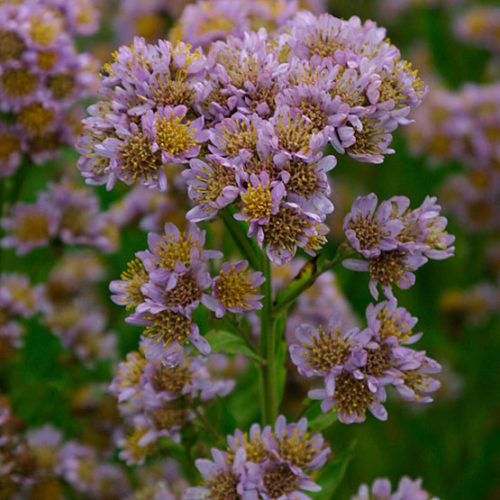
Aster tataricus (Tatarian aster)

Aster tataricus Photo/Illustration: Jennifer Benner


Be the first to rate this plant

Plant Showcase - from our advertisers


Hardiness Zones: 1 2 3 4 5 6 7 8 9 10 11
Botanical Name: Aster tataricus ASS-ter tah-TAR-ih-kus Common Name: Tatarian aster Genus: Aster
Tatarian aster is an impressive, stately perennial with a flowering height of 3 to 6 feet. It can look you in the eye yet require no staking. More important, this aster flowers longer than any other garden aster, beginning in late September and early October and continuing into November. The 1-inch-wide, light lavender flowers are a magnet for local and migrating monarch butterflies. This plant tolerates many soil types, can form large colonies in a few years, and is easily divided.
Noteworthy characteristics: This tall, late-flowering aster attracts butterflies and blooms for many weeks.
Care: Provide full sun and well-drained soil. Hardy to Zone 3, this plant thrives in heat and humidity and adapts readily to soil extremes from wet clay to dry sand (it may spread a little too rapidly in light soil, however). This species needs plenty of room to grow.
Propagation: Most asters require frequent division.
Problems: Asters are sometimes plagued by fungal diseases. The most common are wilt disease, powdery mildew, and botrytis.
Height 6 ft. to 10 ft.
Spread 1 ft. to 3 ft.
Growth Habit Spreads
Light Full Sun to Part Shade
Moisture Medium Moisture
Maintenance Low
Tolerance Frost Tolerant
Characteristics Attracts Butterflies; Showy Flowers
Bloom Time Early Fall; Fall
Flower Color Blue Flower; Purple/ Lavender Flower; Yellow Flower
Uses , Beds and Borders
Style , Cottage Garden, Meadow Garden
Seasonal Interest , Summer Interest, Fall Interest
Type ,Perennials

Plants you might also like

Hemerocallis 'Happy Returns' Hemerocallis 'Happy Returns'
(Daylily)
(15 user reviews)
Hardiness Zones: 1 2 3 4 5 6 7 8 9 10 11

This pale-yellow-flowered daylily distinguishes itself with its profuse bloom and compact size (only 16 inches tall), making it good for containers and the borders. It is an early season bloomer with circular flowers that open in late afternoon and last through the night.

Campanula poscharskyana 'Blue Waterfall' Campanula poscharskyana 'Blue Waterfall'
(Serbian bellflower)
(3 user reviews)
Hardiness Zones: 1 2 3 4 5 6 7 8 9 10 11

Serbian bellflowers have an easy, undemanding habit. Creating a stream of lavender blue, the 1-inch-diameter star-shaped blossoms bloom reliably from late spring to early fall. The foliage remains evergreen in mild winters and needs to be sheared only once in a while to keep its appearance tidy. 'Blue Waterfall' flows beautifully along bed edges and through rock gardens in full sun to partial shade.

Eupatorium purpureum Eupatorium purpureum
(Joe Pye weed)
Be the first to rate this plant
Hardiness Zones: 1 2 3 4 5 6 7 8 9 10 11

Large, domed flowerheads of pink, light purple, or off-white add soft color and texture to the summer and fall garden. The leaves are purple-tinged on thick stems suffused with maroon. This eastern U.S. native attracts butterflies from mid-summer to early fall.

Echinacea purpurea Echinacea purpurea
(Purple coneflower)
(2 user reviews)
Hardiness Zones: 1 2 3 4 5 6 7 8 9 10 11

Because of its carefree performance, this native meadow perennial with daisy-like flowers appropriately inhabits the gardens of many. It blooms from midsummer into early autumn, with prominent, copper-orange central cones surrounded by rose-purple, ray petals (to 5 inches across).

Echinacea purpurea 'Kim's Knee High' Echinacea purpurea 'Kim's Knee High'
(Purple coneflower)
(3 user reviews)
Hardiness Zones: 1 2 3 4 5 6 7 8 9 10 11

This native meadow derivative is a compact version of the species. It blooms from midsummer into early autumn, with prominent, copper-orange central cones surrounded by drooping, rose- or purple-pink ray petals. It will reach 24 inches if not cut back.