Aster novae-angliae (New England aster)

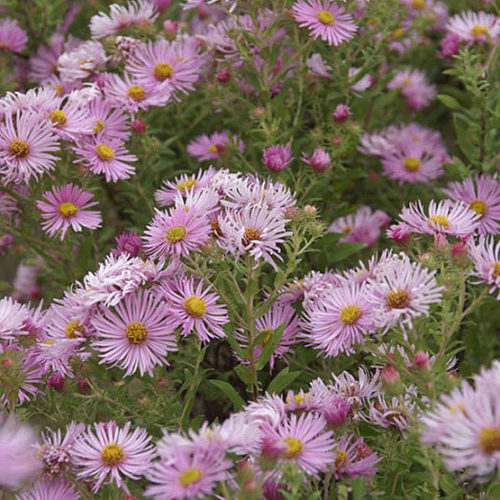
Aster novae-angliae Aster novae-angliae 'Honeysong Pink' Photo/Illustration: Courtesy of Bluestone Perennials


Be the first to rate this plant

Plant Showcase - from our advertisers


Hardiness Zones: 1 2 3 4 5 6 7 8 9 10 11
Botanical Name: Aster novae-angliae ASS-ter no-vay-AN-glee-ay Common Name: New England aster Genus: Aster
Strong, almost woody, stems bear large sprays (to 10 inches) of violet-purple flowers.
Noteworthy characteristics: This aster's flowers have more petals than New York aster, giving them a more frilly look. Its flowers tend to close at night and on cold days. Many cultivars exist.
Propagation: Most asters require frequent division.
Problems: Asters are sometimes plagued by fungal diseases. The most common are wilt disease, powdery mildew, and botrytis.
Height 3 ft. to 6 ft.
Growth Habit Clumps
Light Full Sun to Part Shade
Moisture Medium Moisture
Maintenance Moderate
Characteristics Attracts Butterflies; Native; Showy Flowers
Bloom Time Fall; Late Summer; Summer
Flower Color Purple/ Lavender Flower; Yellow Flower
Uses , Beds and Borders
Style , Cottage Garden, Meadow Garden
Seasonal Interest , Summer Interest, Fall Interest
Type ,Perennials

Plants you might also like

Aster dumosus Aster dumosus
(New York aster, Michaelmas daisy)
Be the first to rate this plant
Hardiness Zones: 1 2 3 4 5 6 7 8 9 10 11

This is a short-growing aster with lilac-blue flowers and creeping rootstocks. Many cultivars exist. It can be used on steep slopes for erosion control.

Boltonia asteroides Boltonia asteroides
(False chamomile)
Be the first to rate this plant
Hardiness Zones: 1 2 3 4 5 6 7 8 9 10 11

Boltonias are vigorous perennials grown for their sprays of aster-like flowers, which appear above clean, gray-green foliage. Their vigorous nature makes them suitable for naturalizing. They are also great in the border (and for cutting), but will benefit from frequent dividing to keep in bounds, and may be cut back in late spring for more compact plants.

Echinacea purpurea Echinacea purpurea
(Purple coneflower)
(2 user reviews)
Hardiness Zones: 1 2 3 4 5 6 7 8 9 10 11

Because of its carefree performance, this native meadow perennial with daisy-like flowers appropriately inhabits the gardens of many. It blooms from midsummer into early autumn, with prominent, copper-orange central cones surrounded by rose-purple, ray petals (to 5 inches across).

Aster novae-angliae ‘Purple Dome' Aster novae-angliae ‘Purple Dome'
(New England aster)
(9 user reviews)
Hardiness Zones: 1 2 3 4 5 6 7 8 9 10 11

Growing to less than 2 feet tall and wide, 'Purple Dome' covers itself with semi-double, deep purple, daisy-like flowers from late summer to midfall. In addition to being mildew resistant, it attracts butterflies. It's great as a border specimin and as a cut flower.

Veronicastrum sibiricum Veronicastrum sibiricum
(Culver's root)
Be the first to rate this plant
Hardiness Zones: 1 2 3 4 5 6 7 8 9 10 11

This species has multiple 5- to 7-foot-tall, tapering spikes of pinkish-lavender flowers from summer to fall. They look like elegant, living candelabras and add a vertical accent to the back of a mixed border or wild garden.