previous
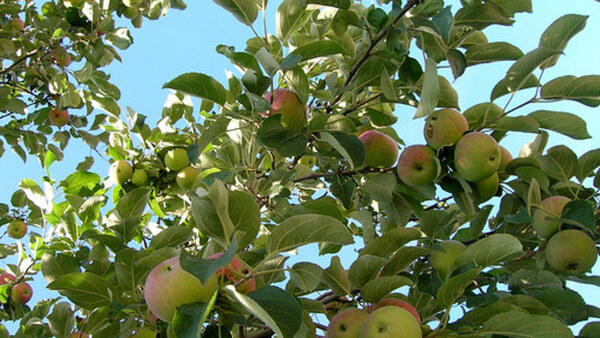
  • Save Money by Growing Your Own
    Save Money by Growing Your Own
  • Make a Succulent Topiary
    Make a Succulent Topiary
  • In Pursuit of the Perfect Potting Shed
    In Pursuit of the Perfect Potting Shed
  • Pretty in Pink
    Pretty in Pink
  • Building a Compost Bin
    Building a Compost Bin
  • NEW Video Series: There's a Better Way
    NEW Video Series: There's a Better Way
  • 6 Tips for Weed Control
    6 Tips for Weed Control
  • Plant an Easy-to-Water Strawberry Jar
    Plant an Easy-to-Water Strawberry Jar
  • Dwarf Citrus Trees
    Dwarf Citrus Trees
  • Containers as Focal Points
    Containers as Focal Points
  • Thoughts From a Foreign Field
    Thoughts From a Foreign Field
  • Designing with Curved Terraces
    Designing with Curved Terraces
  • Elephant's Ears
    Elephant's Ears
  • Fine Gardening's Tip Off!
    Fine Gardening's Tip Off!
  • Slideshow: Beautiful Clematis
    Slideshow: Beautiful Clematis
  • Indeterminate or Determinate Tomatoes?
    Indeterminate or Determinate Tomatoes?
  • Garden Confidential: A Plant Walks into a Bar
    Garden Confidential: A Plant Walks into a Bar
  • Fast-Growing Trees for Impatient Gardeners
    Fast-Growing Trees for Impatient Gardeners
  • Mulch for a Healthy Garden
    Mulch for a Healthy Garden
  • Fragrant Plants for Pathways
    Fragrant Plants for Pathways
  • Colorful Selections for Shade
    Colorful Selections for Shade
  • Stylish Shady Containers
    Stylish Shady Containers
  • Meet Our Mini-Magazines
    Meet Our Mini-Magazines
  • Homegrown / Homemade
    Homegrown / Homemade
  • Comfortable Alfresco Dining
    Comfortable Alfresco Dining
next

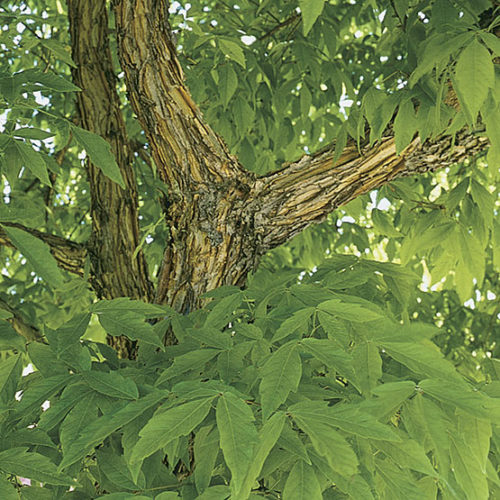
Acer triflorum (Three-flower maple)

Acer triflorum Photo/Illustration: Chris Curless


Be the first to rate this plant

Plant Showcase - from our advertisers


Hardiness Zones: 1 2 3 4 5 6 7 8 9 10 11
Botanical Name: Acer triflorum AY-sir try-FLOOR-um Common Name: Three-flower maple Genus: Acer
This broadly columnar to spreading tree has peeling brown bark, three-palmate mid-green leaves, and brilliant orange-red fall foliage. It grows up to 30 feet tall and 25 feet wide.
Care: Provide fertile, moist, well-drained soil in full sun or partial shade
Problems: Aphids, scale and caterpillars. Mites can cause leaf spot gall in several species. Fungal leaf spots and root rots are common.
Height 15 ft. to 30 ft.
Spread 15 ft. to 30 ft.
Light Full Sun to Part Shade
Moisture Medium Moisture
Characteristics Interesting Bark; Showy Foliage
Bloom Time Early Spring; Spring
Flower Color Green Flower; Yellow Flower
Uses Specimen Plant/ Focal Point
Style Shade
Seasonal Interest Winter Interest, Spring Interest, Summer Interest, Fall Interest
Type Trees

Plants you might also like

Acer griseum Acer griseum
(Paperbark maple)
(2 user reviews)
Hardiness Zones: 1 2 3 4 5 6 7 8 9 10 11

This slow-growing understory tree has highly ornamental, peeling orange-cinnamon bark. Its dark green, three-lobed leaves turn a brilliant orange-red in autumn.

Cercis canadensis 'Alba’ Cercis canadensis 'Alba’
(White redbud)
Be the first to rate this plant
Hardiness Zones: 1 2 3 4 5 6 7 8 9 10 11

Small white flowers appear in profusion on leafless branches in early spring. Heart-shaped leaves emerge bronze, turning green, then yellow in autumn. Another white-flowered selection, 'Royal', has slightly larger blooms and more compact growth.

Cornus florida Cornus florida
(Flowering dogwood)
Be the first to rate this plant
Hardiness Zones: 1 2 3 4 5 6 7 8 9 10 11

This native flowering tree is best known for its early spring blossoms, which are actually yellowish green flowers clustered in the center of four showy, white to pink bracts 1-1/2 to 2 inches long. Clusters of four bright red fruits mature in early fall, often persisting into the beginning of winter. 

Parrotia persica Parrotia persica
(Persian parrotia tree, Persian ironweed)
(3 user reviews)
Hardiness Zones: 1 2 3 4 5 6 7 8 9 10 11

Parrotia persica has one of the most beautiful foliage displays, in addition to year-round eye appeal and ease of maintenance. Reddish-purple when unfolding in spring, the leaves are a lustrous dark green in summer, and yellow to orange or scarlet in fall. Leaves hold their color for a long period. Older branches and trunks develop an exfoliating gray, green, white, and brown color that is a welcome asset in the winter garden. It grows successfully in Zones 4 to 8, tolerates sun and partial shade, and is easy to transplant. Often, vegetatively propogated forms offer more reliable fall color.

Cercis canadensis and cvs. Cercis canadensis and cvs.
(Eastern redbud)
Be the first to rate this plant
Hardiness Zones: 1 2 3 4 5 6 7 8 9 10 11

Bright purplish-pink blooms are borne in clusters, before the leaves, along smooth gray branches. Heart-shaped leaves emerge bronze, turning green, then yellow in autumn. Cultivars are available with white ('Royal White') or pink flowers ('Tennessee Pink'), purple foliage ('Forest Pansy'), and weeping form ('Covey'). Grows 15 to 25 feet tall with a slightly wider spread.