
I got my first orchid plant at age 12, when I was growing up in the Ukraine. An orchid’s ability to root and grow entirely above the ground fascinated me. I soon acquired a collection of orchids that I grew indoors, and my interest eventually turned into a profession. With their unusual growth habits and enigmatic blooms, orchids have intrigued humans for thousands of years. However, most of what we know about orchid culture has been accumulated over the last 200 years or so.
Many of the orchids brought to Europe by plant hunters in the early 18th century were epiphytes. Also known as air plants, epiphytes grow on other plants without connecting to the ground or harming their hosts. European growers, however, kept them in hot, humid, unventilated houses, which proved devastating for the orchids. The legend that orchids were difficult to grow began in that era, and it took almost 100 years for growers to develop successful methods for tending them.
Now we know that many orchids are as easy to grow as African violets. The easiest to grow indoors are epiphytic—the same orchids considered so stubborn and uncooperative by early British orchid growers.
Here, I will focus on growing orchids indoors—specifically those that thrive best under average conditions in a home environment. The keys to success are knowing an orchid’s needs, choosing an orchid based on the conditions you can provide, then giving it the right care.
Orchids vary in their temperature preferences
Photo/Illustration: Alex Vasiljev
Temperature affects an orchid’s overall growth and especially its bloom habits. The most critical time for orchids is during the winter, when many of them are preparing to bloom. Orchids are classified into three types based on their winter temperature needs: cool-, intermediate-, and warm-growing.
Cool-growing orchids enjoy night temperatures in winter around 50°F and daytime temperatures not exceeding 70°. Intermediate-growing orchids prefer minimum winter-night temperature around 60° and daytime temperatures from 70° to 85°. Most orchids best suited for growing indoors are in the intermediate group (see sidebar). Night temperatures for warm-growing orchids should not be lower than 65°, and daytime winter temperatures can range from 75° to 85°. During the summer, intermediate- and warm-growing orchids can stand temperatures up to 85° or 90° as long as they have good air circulation. Cool-growing orchids prefer to stay cool in the summer.
A fluctuation of 10 to 20 degrees between day and night temperatures is essential for all orchids and triggers them to produce flowers. This difference is most important for cool- and intermediate-growing orchids because of the conditions they are used to in the wild. In the winter, it’s possible to achieve this fluctuation by lowering your home’s thermostat or by moving an orchid to a cooler spot, like a porch or a garage, at night.
Most orchids flourish under bright, indirect light. Full eastern or western exposure or indirect southern exposure usually provides enough light. However, as with temperature, specific orchids may require a certain light intensity. When buying an orchid, check the label for its light preference, then observe how much light your orchid actually receives.
Symptoms of excessive light are sun burn, yellowish foliage, and a plant that looks weak and dehydrated. On the other hand, if you bought an orchid in bloom and it did not rebloom the following year, even though the foliage looks green and full, consider giving it more light. Also make sure the temperature range is correct.
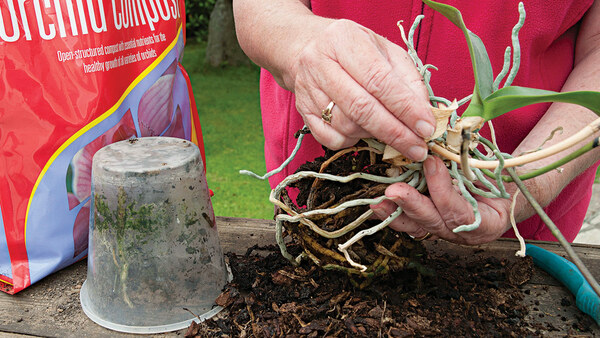
Repotting an orchid
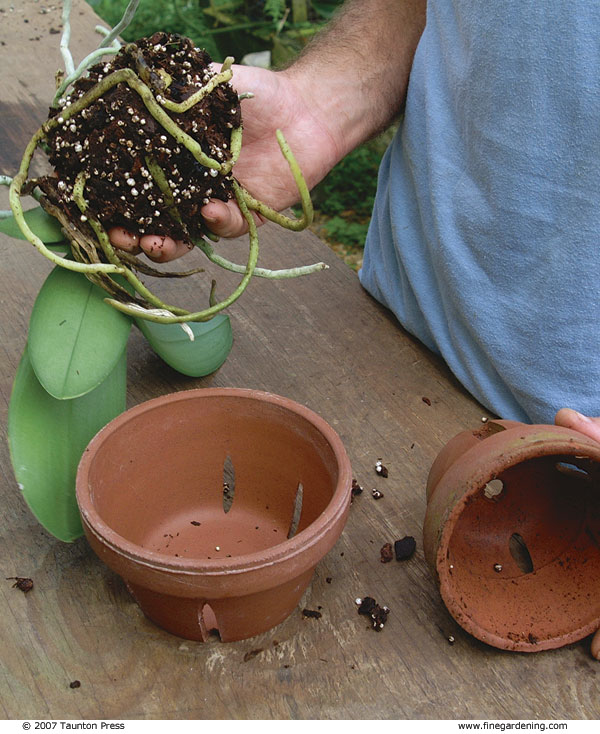
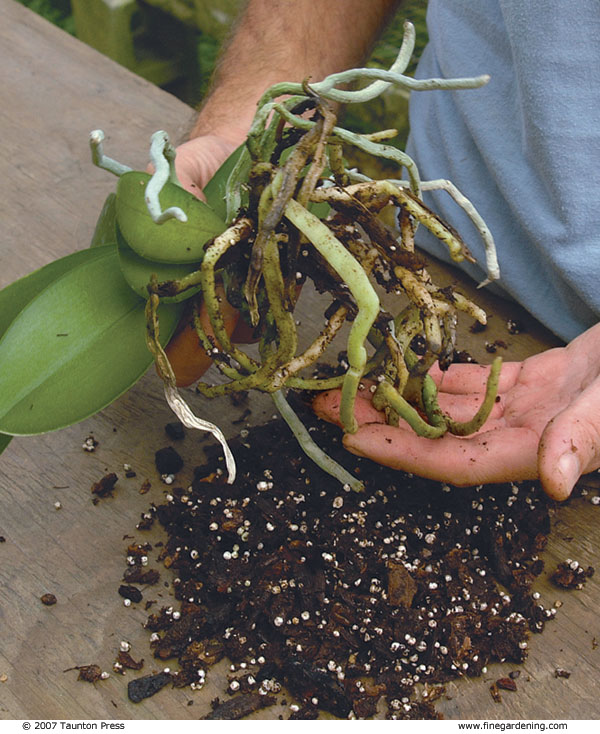
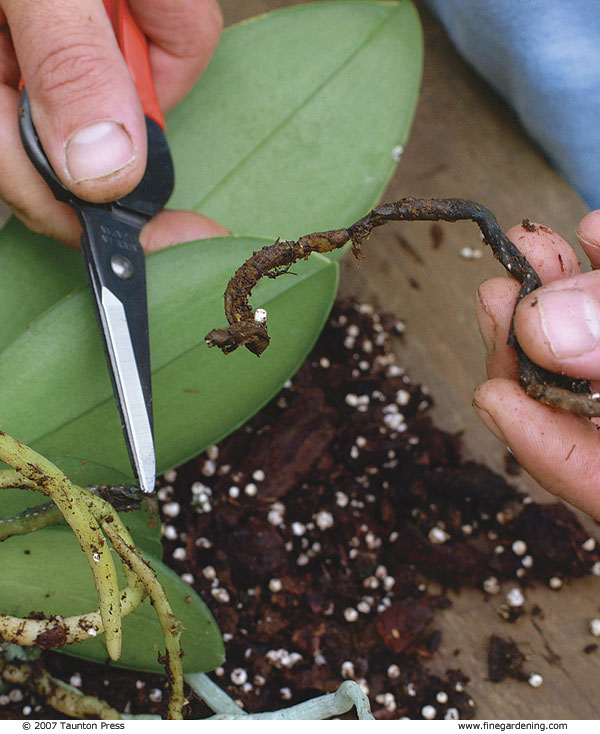
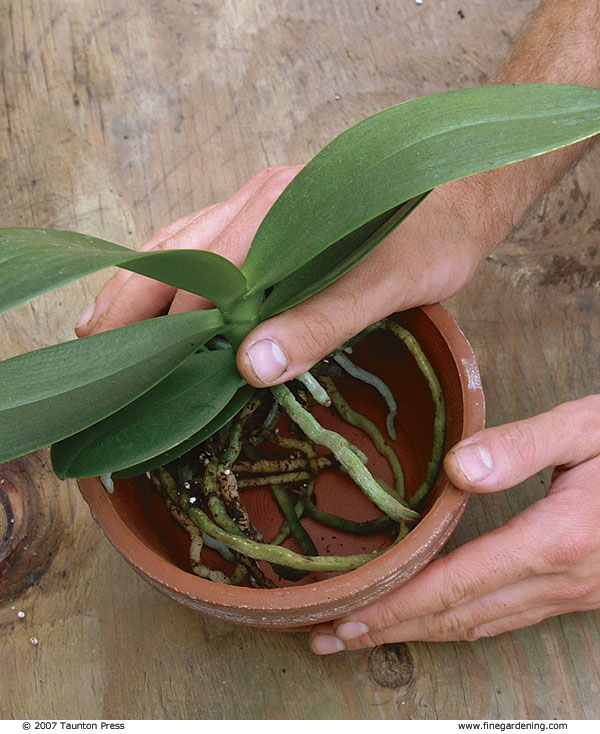
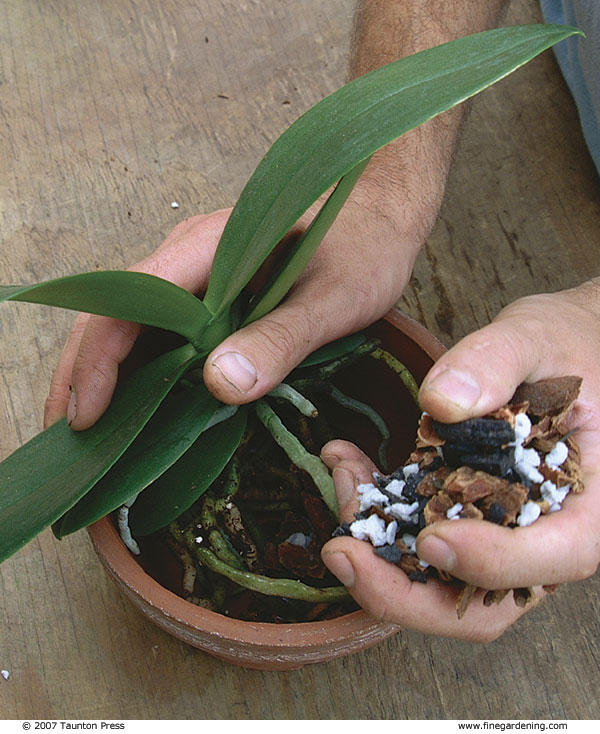
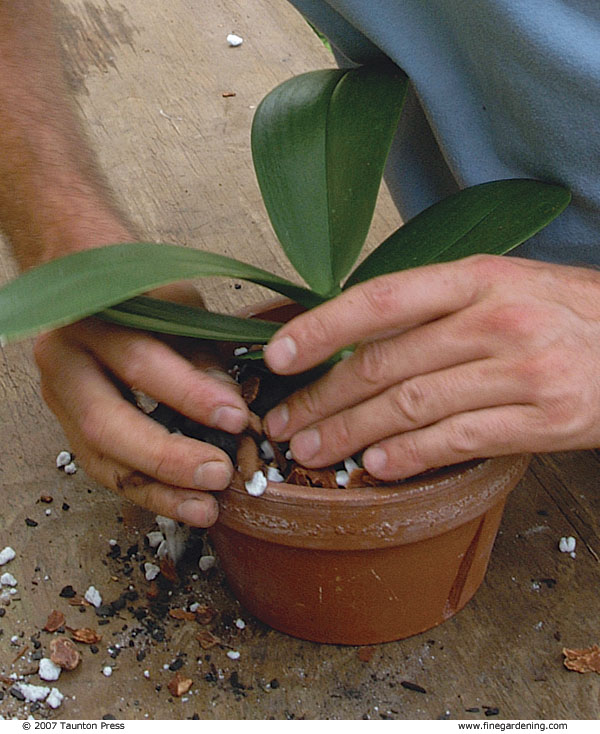
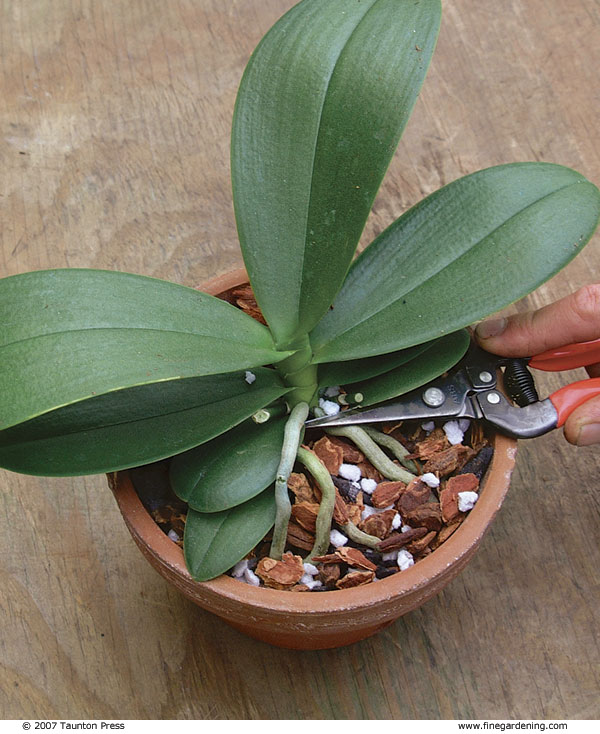
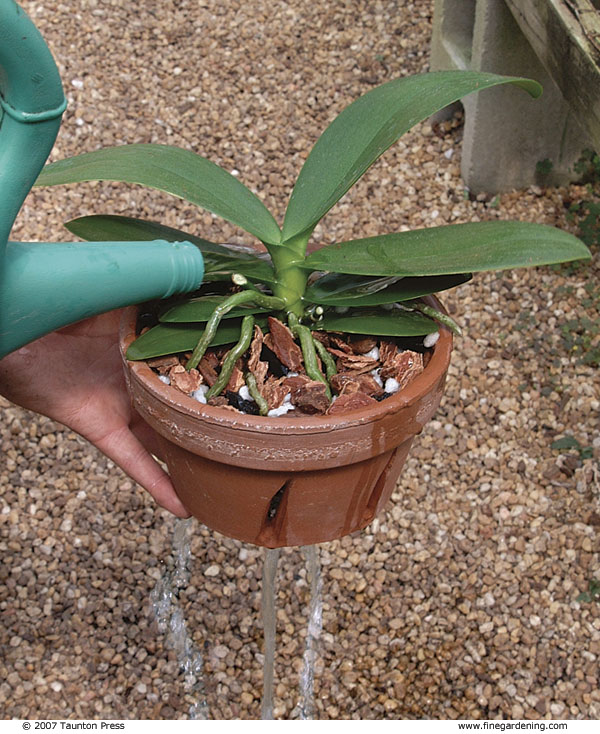
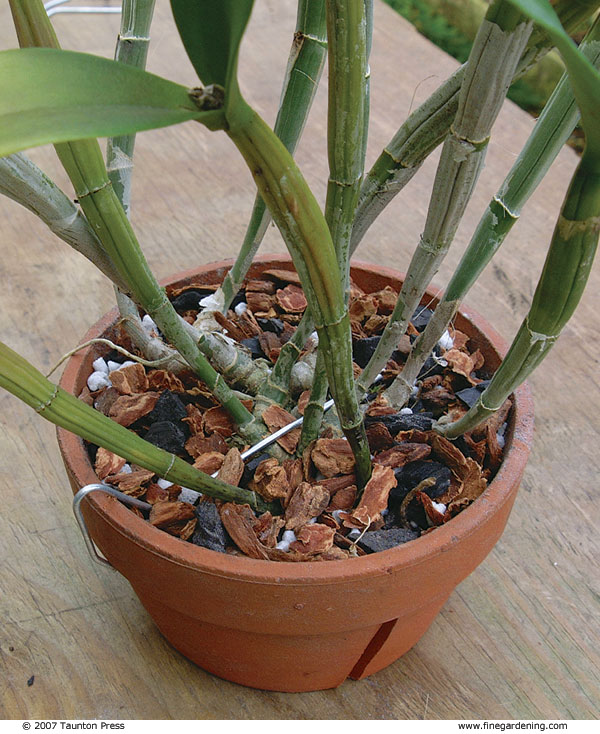
It takes only a few minutes to repot an orchid, and this maintenance is essential to keep the plant thriving.
Too much water can be as deadly as too little
Watering is the aspect of orchid growing that can be the trickiest. Most epiphytic orchids should be grown in a loose potting mix. To be sure the orchid gets enough water, drench the mix until water runs out the bottom. Then allow the potting mix to dry out before watering the orchid again. The top layer will dry more quickly than the soil at the bottom and can make you think the orchid needs more water, but don’t be fooled.
A simple way to test when an orchid needs water is to compare its weight before and after watering. Make sure the plant is completely dry before testing, then remember how it feels when you lift it. By learning the difference, you can determine how much moisture is left in the container. Experienced orchid growers advise that if you are not sure whether or not to water your orchid, wait a day.
Also keep in mind that orchids need less water during their resting period, when they are not blooming or producing new growth. With the appearance of new roots and shoots, an orchid can be watered more often.
Usually, resting orchids will need water once a week. When they are actively growing, I water them twice or more per week. However this is not a rule to follow precisely; you must use your own judgment. The need for water will also depend on the temperature, the container size, and the potting mix. Shriveled new stems and wilted leaves are indicators that an orchid is staying dry for too long. Too much water will eventually cause rot within the root system, leaving a plant dehydrated.
Most orchids also welcome a moderate level of humidity (50 percent or higher). To achieve this, you can mist them frequently with water or use a humidifier in your home. During the growing period, fertilizing orchids once or twice a month with a reduced-strength fertilizer will promote healthy growth and strong blooms. My favorite formula is a 20-20-20 solution.
Many orchid growers I’ve met have a specific soil mix they swear by. In my experience, it doesn’t matter what kind of components and how much of them you use when potting up an orchid. It’s only important that the mix be airy, drain well, and decompose slowly. Whether you mix your own or buy a prepared mix, it will work as long as those criteria are met. The numerous options include bark, sphagnum moss, tree fern fiber, and peat moss.
Container size, however, is an important factor, because orchids like to be root-bound. Their roots often spread outside the container, right into the air. This does not necessarily mean the plant needs a bigger pot. See the sidebar above to help you decide when to repot. The new container should be just big enough to accommodate the root system and provide room for growth for the next year or two. The choice of clay or plastic pot is up to you.
Dividing is not necessary every time you repot. I like to let an orchid grow into a larger specimen that produces multiple flowers. Limited growing space can be one reason for dividing, as well as the desire to have more than one plant, or to trade with friends. To grow quickly into a healthy blooming plant, each division should have no less than three developed stems, also known as pseudobulbs. In many orchids, you will find old, bloomed-out pseudobulbs. You should cut these off only if they’re dried and yellow; if they are still green, leave them in place.
Keep an eye out for pests and disease
Proper care, including good air circulation, usually keeps orchids free of problems. Nonetheless, it can be heartbreaking to find that an orchid is being tortured by pests or exhausted by disease. Early detection is a key to keeping orchids healthy. The earlier you notice a problem, the easier it will be to fix.
First, I isolate a problem plant from its neighbors. If pests like scale, aphids, or mealy bugs are visible, I remove them manually with a soft brush. If a pest does get out of hand, I may resort to using a pesticide. After the treatment, I keep the plant in isolation for two to four more weeks, monitoring it regularly.
Appearance of fungal or bacterial diseases on orchids can be an indication of cultural problems. The first step is to identify the disease. The next step is to evaluate growing techniques and adjust them if needed. For example, fungal disease can be the result of poor air circulation. With some bacterial diseases it is necessary to reduce watering. Sometimes a change in culture will be enough to fix the problem. If not, turn to a more aggressive treatment. Consult your local extension agent or garden center for help in choosing an appropriate fungicide or bactericide.
In the summer months, orchids welcome fresh air. Of course, outdoor conditions should be similar to those you have provided for your plants indoors. When blooming time comes, it is fine to display your treasure out of the growing area, in a place of honor. The plant will not suffer if it gets less light for a couple of weeks, and it will make you proud of your achievement.
Start with these easy orchids
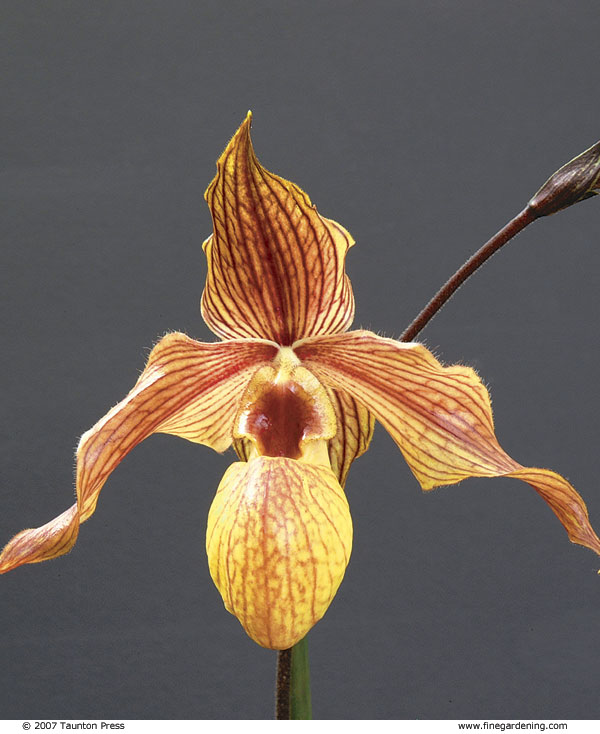
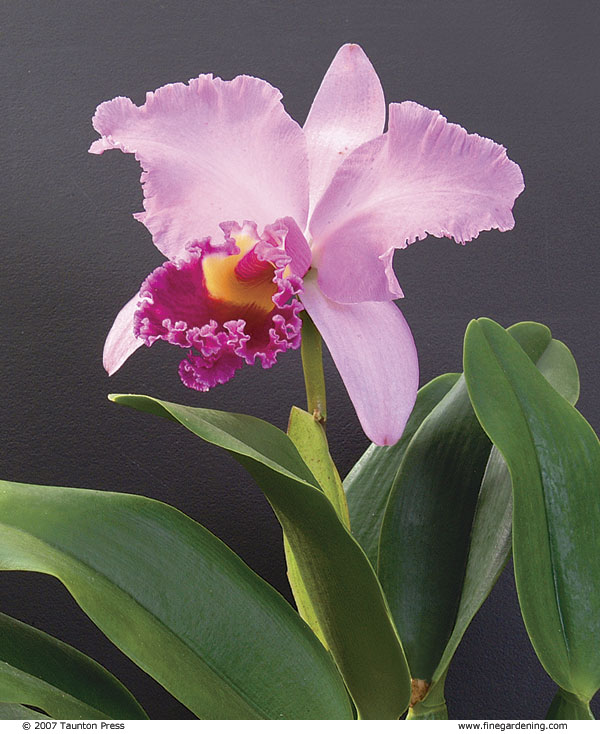
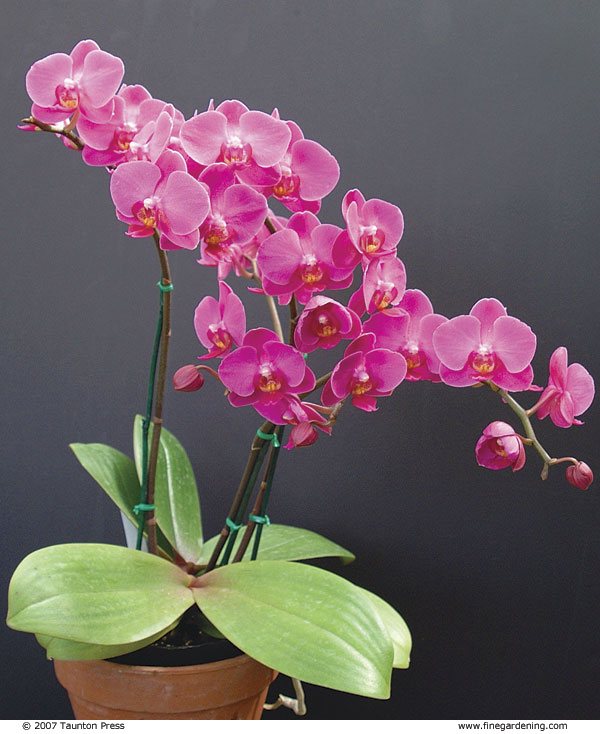
The following groups of orchids are among the easiest to grow indoors. Most orchids in these groups are considered intermediate-growing orchids in terms of their temperature needs. That is, they prefer minimum winter-night temperatures around 60° F, and from 70° to 85° during the day.
Lady’s slipper orchids
Tropical lady’s slippers (Paphiopedilum spp. and cvs.) are small to medium, with showy, long-lasting, waxy flowers and leaves that are often mottled. They are perfect for indoors, since they can tolerate lower light. They do not like to stay dry for more than a day or two, especially when growing or blooming. Bloom season is winter and spring.
Cattleya group
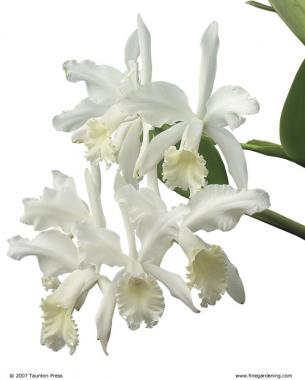
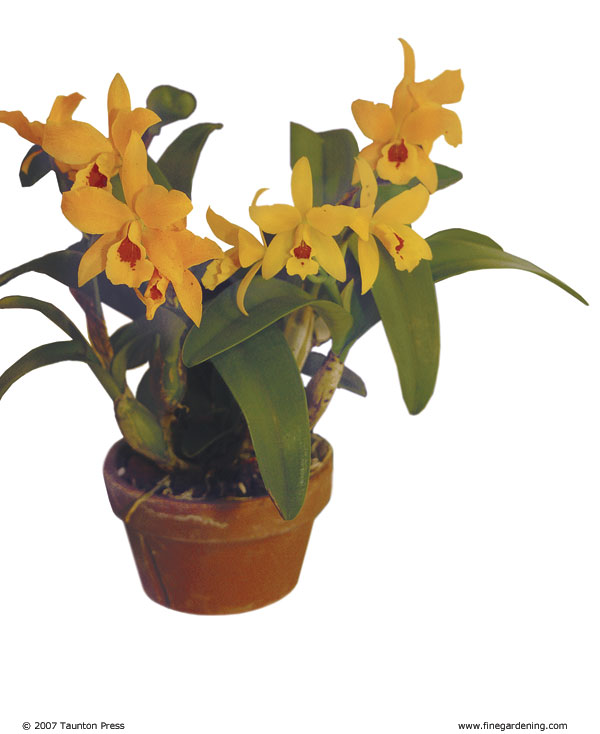
This group includes species and cultivars of Cattleya, Laelia, Rhyncholaelia, Sophronitis, and their hybrids. Plants are small to medium and produce medium to large brightly colored flowers. To bloom, they need filtered bright light. The potting mix should be very dry before the plant is watered. Bloom time is winter into late spring.
Moth orchids
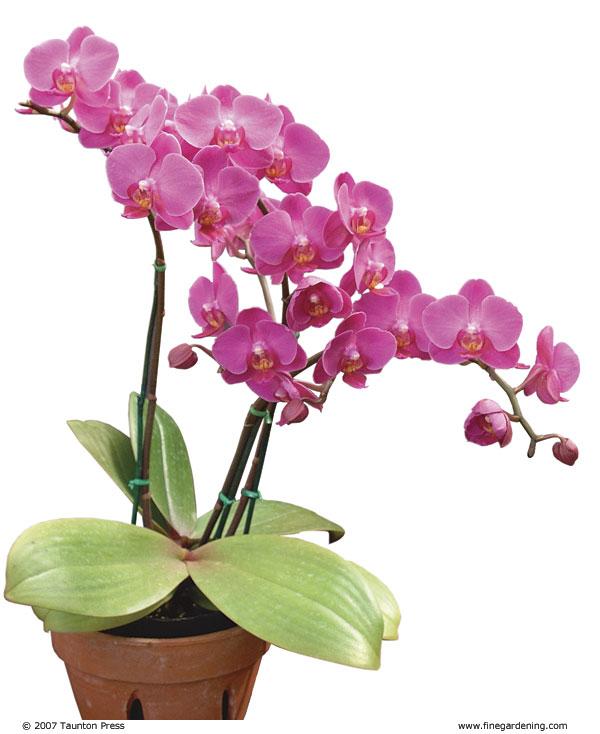
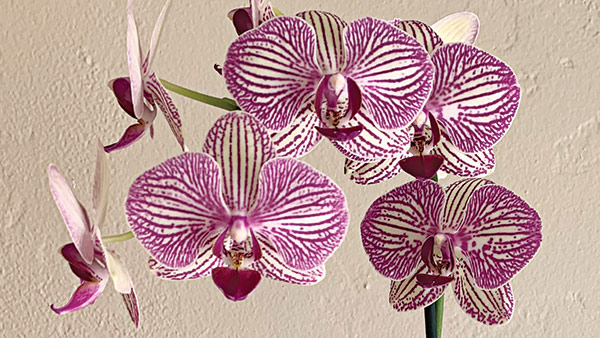
This group includes species and cultivars of Doritis and Phalaenopsis, some of the easiest orchids to grow. These medium-size plants produce sprays of small, medium, or large flowers that can last for months. They prefer filtered light and regular watering, with short dry periods. Blooming continues from winter into late spring.









Comments
Thanks for this blog on orchids! Its very helpful because I do need to transplant a couple of mine. Also I didn't know about the fluctuating temperatures that they can handle! We live in a log house and we have wood heat. Needless to say that our temperatures do fluctuate depending on how much wood we put in the stove! The orchids seem to be doing quite well! Thanks....
My sweet daughter-in law-to-be blessed me with my 1st orchid for my birthday back in December 2015. The flowers were lovely on my kitchen table & seemed nearly effortless: I loved that part! It thrived beautifully with the weekly watering with the included measuring cup & directions that told me how much water to give. It grew more blooms & seemed happy in a filtered light area of our bay window all winter until mid-April. At the end of April, it went downhill quickly. I tried changing it's location, let it dry out a few days as a friend suggested, took it away from an AC vent; nothing seemed to stave off its decline. It began losing blooms, one every few days. Here at the beginning of June, the stems are bare of blooms. One stem has turned brown down to all but the last 2-3 segments. The other stem is green except the top 4 segments, but it is browning also. The plant itself, consisting of 8 dark green, healthy-looking leaves, looks fine & shows no evidence of ill-health. Is this the "resting time" that is described above? If so, do I need to change the location or watering schedule during this time? Thanks for your help!
Sheryl,
My son gave me an orchid for Mother's Day. After it quit blooming, I got only green leaves. After a few months of not blooming again, I began to neglect the the poor thing. I tried to give it to a few people, and no one wanted it so thinking surely it was not going to do anything again, I set it in the garage. I pretty much neglected it for a few weeks. Then feeling guilty because my son gave it to me, and that it was still alive, I brought it back in and put in a our guest room. There I would water it when I thought about it, maybe every 2-3 weeks. Finally with lack of a place to really put it, I brought it to work and set it in my window at work.
That was 6 years ago. It has been in my window at work, I give it a little drink before I go home every Friday for the weekend and this February it bloomed for the first time after the initial bloom with 6 big gorgeous blooms that lasted until July 15th this year. From the middle of February until July 15th it had beautiful full blooms. I was so thrilled I kept it and never dreamed it would bloom again.
That immediately made me begin to do some research on them. Now I am going to take that little survivor home and re-pot it and go to the store and buy me another one.!!!
This little plant has just blessed my whole year!! I never would have believed it. So glad I brought it back in.
Good luck with yours, and mine has been in a window that gets indirect light, only a little water on Fridays and its very cool in my office at night.
Hi there,
A friend gave me their ''dying'' Phalaenopsis Orchid to save and it doesn't seem too late. It no longer has flowers and the stem is dead but the leaves look healthy and are a dark green. Would you have any extra advise for me? Thanks for the info!
My heart was broken when I returned to my Arizona winter home and discovered my house sitter had somehow managed to kill then toss my greenhouse window full of Miltoniopsis orchids. They were so lovey and easy to care for. RIP, beautiful Pansy faces!!!
Hi! Our orchid was purchased from a floral place, it came with lots of flowers but the original large stalks died...tinier shoots with white roots have sprouted of the dead parts and I'm trying to figure out what to do to transplant them safely...anyone have ideas? I've looked, but I don't know what to call the little 'babies' that have grown off the dead 'stalks'...hoping someone here can help me out! Thanks :)
It sounds like you have keikis. if you Google orchid keikis you can get a ton of information on what to do with them.
Love your post. I will recommend this to my mom. She loves orchids.
Hi,
Does anyone know where I can buy metal pin clamps to lock orchids inside the pot?
Thanks.
I found mine at Home Depot but I've also seen them on Amazon.
I was given a miniature orchid this year and the flowers died off after a long period and I assumed the plant goes dormant after flowering so I cut off the stem that had the flowers, now a friend tells me that I shouldn't have done that and that it will never flower again. Is that true and if so is there anything I can do?
Your orchid can absolutely flower again given the proper conditions. I remove the flower spikes from my entire collection when they are done blooming to push them into vegetative growth and allow them to recover. There are a lot of grate videos on YouTube that I found very helpful in caring for my orchids. MissOrchidGirl has a lot of really great information in her videos. I hope this helps.
I want to give the orchid flowers continue flowering flowers in the next. But do not know how to take care of this, through this article I have learned many precious experiences from the care of orchids vong hoa tang
Log in or create an account to post a comment.
Sign up Log in