

Soil pores help plants get a drink
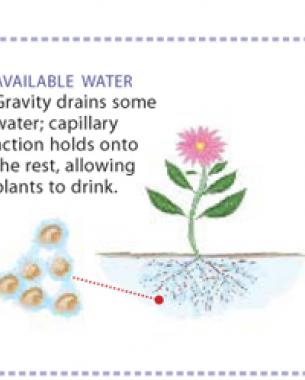
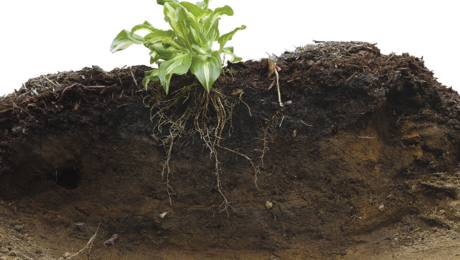
Plants do not look upon all soil water equally. Remember your high-school biology class when you watched water being drawn up a capillary tube against the pull of gravity? Water rose in that tube because the water molecules were attracted to each other and to the glass: the thinner the tube, the greater the pull—and the higher the water rose. Mineral particles in soil create pores of various sizes that, like capillary tubes, attract water. Gravity is strong enough to drain water from the largest pores, but neither gravity nor plant roots is strong enough to extract the water from the smallest pores. Between these extremes are pores that hold water that plants can use.
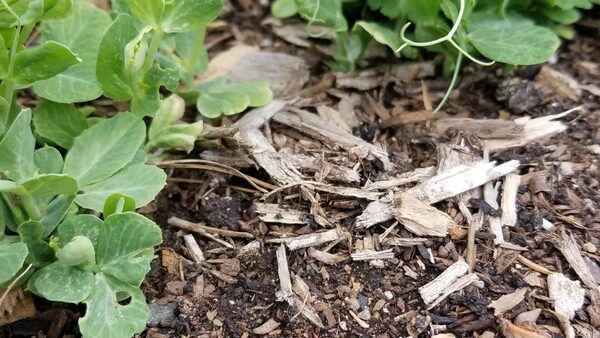
The best thing for plants is water that soaks into the soil, rather than runs off, and excess water that drains away quickly. This leaves two things in the soil: some water for later use by plants and room for air. The ideal soil contains about 50 percent pore space, half of which is filled with air and half with water. Except in sandy soils, capillary pull—not gravity—is the main force that draws falling water into the ground. This is because the impact of raindrops breaks mineral aggregates into smaller particles, reducing the number of larger pores. Capillary forces also pull water sideways, which is why it is unnecessary to place drip-irrigation emitters right next to plants. Mulching with organic materials, such as straw, leaves, and compost, softens the impact of raindrops and increases the amount of water entering the soil. Loosening the soil surface with a hoe or tiller also helps water move into the soil.
Following a big rainfall, all soil pores fill with water. Gravity soon pulls water down and out of the largest pores, leaving the soil at “field capacity,” when all remaining water is held by capillary forces. Plants and evaporation first claim water that is held within the larger capillary spaces because it is the easiest to remove. Eventually, the only water remaining is in the smallest pores, where it is held too tightly for plants to access, causing them to wilt. When wilting progresses to the point from which plants cannot recover, any remaining water is said to be at the “permanent wilting point.”
Plants can only use “available water,” the amount in the soil that falls between field capacity and the permanent wilting point. Even though clay soils, with their many small particles, can store the largest amount of water, they do not offer the most available water because they still hold a large portion of that water at the permanent wilting point. Sandy soils, with their large pores, have even less water available to plants. Medium-textured soils offer the greatest available water.
The common advice given about watering is to make sure your plants get 1 inch of water a week, which is roughly equivalent to 1/2 gallon of water per square foot of soil. Accurately determining how much water your plants need at any given moment depends on a number of variables, such as the plant type and recent weather. Soil structure also plays a large role. It would require 1 inch of water to wet a foot of sand to field capacity from the permanent wilting point, while it would take about 2 inches in a silt loam soil and 1.3 inches in a clay soil. This again shows that a medium-textured soil offers the most available water.
When soil becomes waterlogged, roots are in the same predicament as Coleridge’s ancient mariner, with “Water, water every where, Nor any drop to drink.” Roots need air to function, so when water occupies all of the pores’ space, plants can’t take a drink. This fact explains why Mike’s houseplant would respond the same way to overwatering as to underwatering.
2 smart ways to help your soil hold water
1. Add organic materials
In sandy soils, organic materials soak up water like a sponge. In clay soils, they aggregate the small particles into larger units with bigger pores, which allow plants easier access to water.
2. Maintain proper soil structure
Another way you can help maximize the available water is to maintain good soil structure, one with a range of pore sizes. In clay soils, avoid excessive walking or driving on the soil, which will break up soil aggregates, as will excessive tilling or tilling wet soil. In sandy soils, avoid tilling because it infuses these already well-aerated soils with so much air that organic materials burn up too rapidly.






Comments
At the point when soil gets waterlogged, establishes are in a similar pickle as Coleridge's antiquated sailor, with "Water, water all over, Nor any drop to drink." Roots need air to work, so when water involves the entirety of the pores' space, plants can't take a beverage. Online Class Help
I love planting and this post really helps me out in many ways. finegardening providing the best suitable content for their clients. People love to read nursing assignment help for more tips and tricks to get good soil.
Gardening is the best way to give your brain relaxation. When we get bored or fade up from continuously working, we need another activity, and gardening is one of them. When I am getting tens of continuously working on a professional logo designer, then I take a short break and spend some time in my garden.,
.
Log in or create an account to post a comment.
Sign up Log in