

After all the Christmas decorations are packed away, the house looks drab. So instead of letting the winter blues kick in, we make our rooms warm and inviting with flowers. We force the usual amaryllis, paperwhites, and tulip bulbs, but we also force branches into bloom to add even more color and fragrance to our suddenly quiet home. It is very satisfying to sit in our breakfast room early in the morning and observe the daily progress of forsythia buds as they swell and burst open. We cannot think of a more economical way to raise our spirits.
Collect branches in January and February
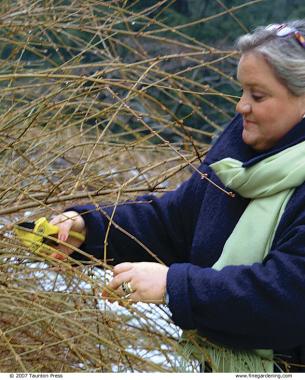
Many ornamental trees and shrubs set their flower buds during the previous growing season. These buds must experience a period of dormancy before they will open. After six weeks of cold temperatures, buds will usually come out of dormancy after two to three weeks of being exposed to warmth and moisture. Depending on your geographic location, usually by the time February arrives, most species suitable for forcing have experienced the required period of dormancy.
Coincidentally, late winter is the best time to prune deciduous trees and large shrubs. We usually head out into the yard with pruners in hand starting in January. We get a jump-start on our pruning along with an early gift of spring color inside our house. We prune our trees and shrubs for shape and to remove crossing branches and old or diseased wood. From the wood we have cut off the plant we select branches for forcing that are less than ½ inch in diameter and cut them to the desired length.
We like to prune on a mild winter day when the temperature is above freezing. Branches and buds are softer and more pliable and will be better able to make the transition from cold outdoor temperatures to warm indoor temperatures. We inspect the branches carefully when making our selections, looking for those with lots of plump flower buds. Flower buds are round and fat, whereas leaf buds are smaller and pointed. If we are not sure what type of bud we are looking at, we do a little bud surgery. When cut open, a flower bud will reveal miniature flower parts on the inside.
Top choices for forcing
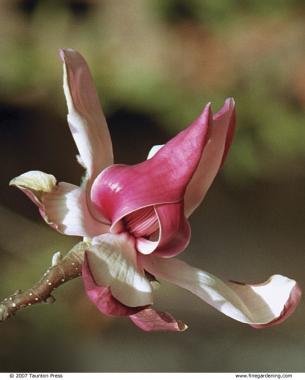
Branches won’t flower until they’ve had a proper cold period, usually about six weeks. If you try to force a particular plant into bloom and it doesn’t work, it may be too early. Try it again in a couple of weeks.
The plants listed below are grouped according to their earliest cutting time. To learn more about many of these plants, click on the the links in the list.
January
Cornelian cherry (Cornus mas)
Filberts—for catkins (Corylus spp. and cvs.)
Forsythias (Forsythia spp. and cvs.)
Fothergillas (Fothergilla spp. and cvs.)
Witch hazels (Hamamelis spp. and cvs.)
Late January/early February
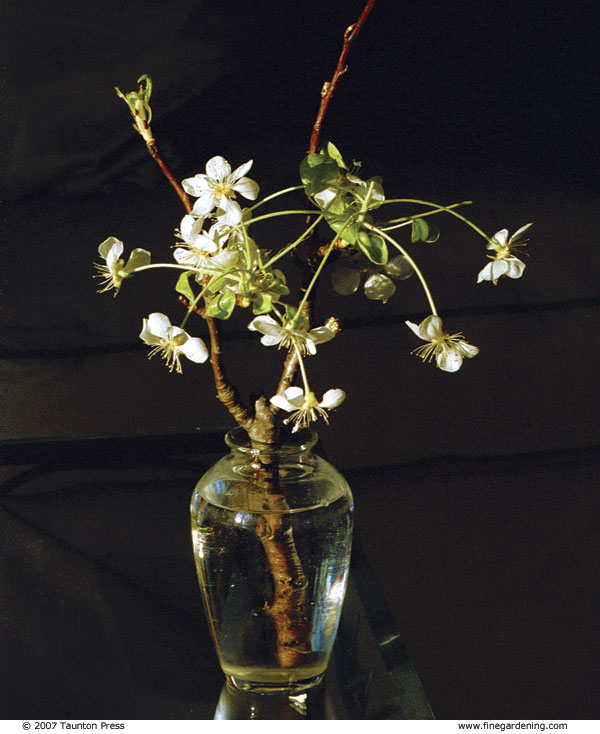
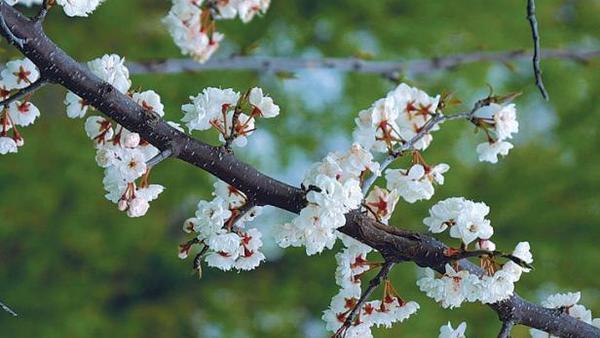
Bradford pear (Pyrus calleryana ‘Bradford’)
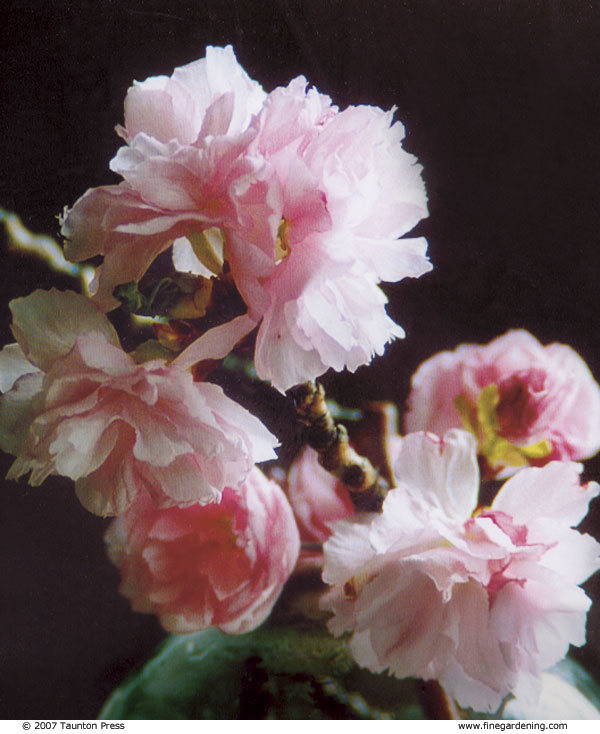
Cherries (Prunus spp. and cvs.)
Mid to late February
Beeches—for catkins (Fagus spp. and cvs.)
Birches—for catkins (Betula spp. and cvs.)
Eastern redbud (Cercis canadensis)
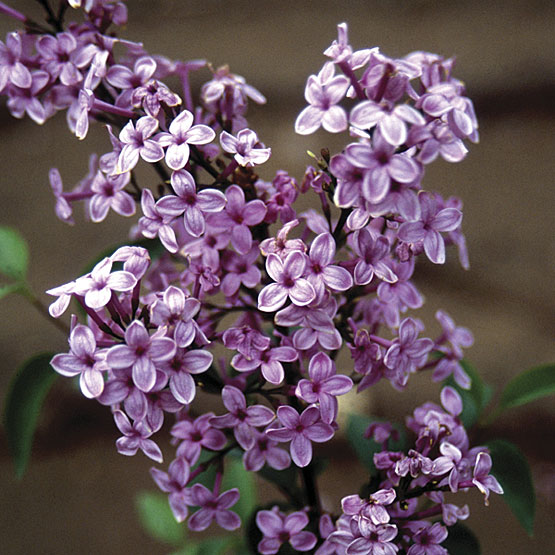
Lilacs (Syringa spp. and cvs.)
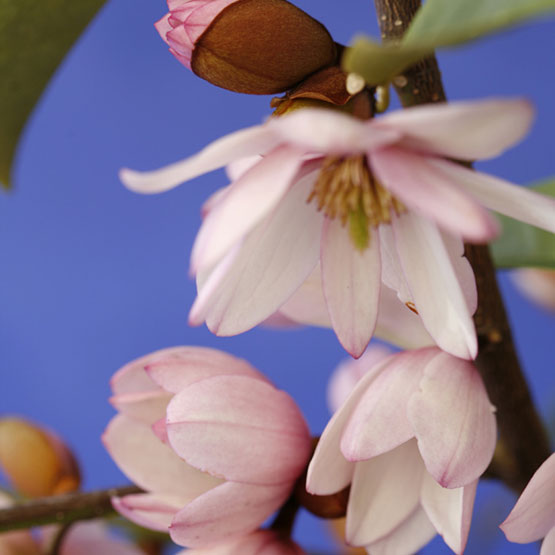
Magnolias (Magnolia spp. and cvs.)
PJM rhododendron (Rhododendron ‘PJM’)
Quinces (Chaenomeles spp. and cvs.)
Red maple (Acer rubrum)
Serviceberries (Amelanchier spp. and cvs.)
Willows – for catkins (Salix spp. and cvs.)
Recut branches and place them in a cool spot inside
Our method for processing branches is pretty straightforward; we cut and gather the branches and bring them inside. We then add floral preservative, according to the instructions on the package, to a bucket of warm (100° to 110°F) water and set it aside. (You can make your own preservative with 1 tablespoon of Listerine or 1 tablespoon of lemon-lime soda per quart of water.) The preservative will promote hydration and retard bacterial growth, keeping the water clear for up to a week.
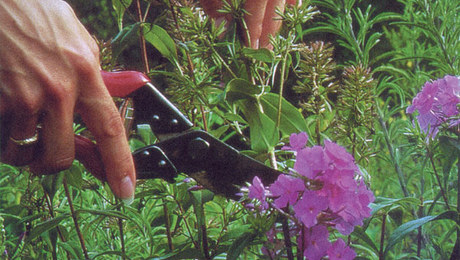
Next, we fill a sink with very warm water. Holding the stems underwater, we recut them at a severe angle an inch or two above the original cut (see the tip below). For larger branches—around ½ inch diameter—we split the end of the stem in half for a distance of about an inch to allow more of the interior of the stem to be available to take up water.
We immediately place the stems in the bucket of water. At this point we have a choice to make. We can simply store all of the stems in this bucket of water and set it aside in a cool place, like a protected porch or garage, where the temperature is 45° to 55°F, then arrange the branches for display when the first buds begin to show color. Or we could immediately create an arrangement, put the masterpiece in a place of prominence, and watch as the buds slowly swell and spring into bloom. In either case, to keep the branches healthy, we will change the water and add new preservative each week, or when we notice the water starting to discolor. Both before and during bloom, place the branches away from bright, direct sunlight and away from any direct heat source, which will dry out the buds and branches and reduce overall bloom color and quality. Ideally, try to duplicate the cool, moist environment of spring weather. If you use common sense when selecting a location, your blooms should look good for at least a week. Branches forced for their foliage will last even longer.
Most plant material that forces well is readily available in your backyard. By cutting several branches each week as winter turns to spring, you can have a continuous show of color during January, February, and March. Sometimes there are even surprises, so it pays to experiment. Last fall, expecting nothing, we cut some forsythia branches for accents in a large arrangement for our Thanksgiving celebration. To our surprise and delight, the forsythia bloomed in time for the holiday.
Cutting tip
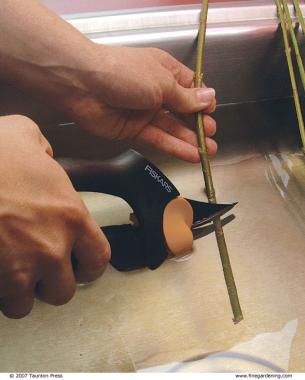
After bringing the branches inside, fill a sink with very warm water—as hot as you can stand it without scalding your hands. Very warm water is important because it contains the least amount of oxygen. If oxygen gets into the stems it can block water from being taken up, thus preventing hydration. Hold the stems underwater and recut them at a severe angle an inch or two above the original cut. The stems will quickly absorb the water.








Comments
Will some of the branches root?????
Have 4 amaryllis 3 to 5 years after receiving as xmas gifts. Continue normal care throughout the year. In December their leaves start to die back, one by one. They are now poised, as we speak, to push out their magnificent buds. Can't wait for the show. The key, for me, is to continue to water, re-pot, etc. as you would any other house plant. And keep them in a sunny window.
Log in or create an account to post a comment.
Sign up Log in