
As often happens, inspiration comes when you least expect it. Driving to work one day, I spotted a man clearing underbrush on a wooded lot. I stopped and we talked, and before I knew it I’d hired Russ Walters to clear a similar patch of woods for me.
Russ set to work on an area about 75 feet long and 20 feet wide at lower edge of our property. It was so overgrown with brambles, nettles, vines, skunk cabbage, and weedy shrubs that you could barely walk through it. And to make matters worse (or so I thought), the soil was perpetually moist. I’d used the area as a dumping ground for garden refuse, leaves, and broken branches. To disguise the mess, I planted a screen of butterburs (Petasites japonicus) and variegated grasses (Miscanthus sinensis ‘Variegatus’). Both of these plants are vigorous growers and had spread with abandon through the area.
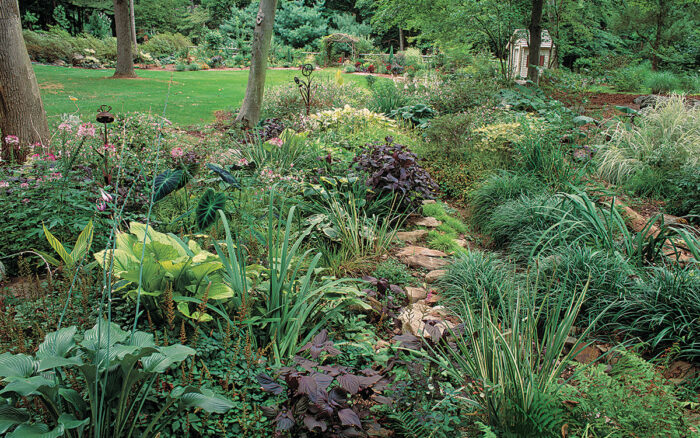
If you have a similar “trouble” spot on your property, consider looking at the site with a fresh perspective. There are many beautiful plants that thrive in damp soil. If water naturally flows through your property, as it does in this area of mine, it’s a wonderful opportunity—coveted by many a gardener who must settle for an artificial pond or water feature. Spreading beneath the cool canopy of mature trees, this shady, wet stretch of ground has become my most treasured garden area.
Hiring Russ Walters was the impetus that got my project under way. I’d highly recommend getting some good, strong help to anyone tackling such an area. While Russ pulled out the shrubs, brambles, and vines, my husband, Skip, and my son, Steve, dug up the big clumps of grass and replanted them in various areas of the garden. I set to work digging out the butterbur and skunk cabbage.
Clear the site in sections
What seemed like an insurmountable job slowly moved along because we took small areas, completely cleaned them out, and then moved on. While clearing can take place at any time of year, we did this work in winter because the weather was mild and the ground wasn’t frozen. It sure beat sweating in hot, muggy July.
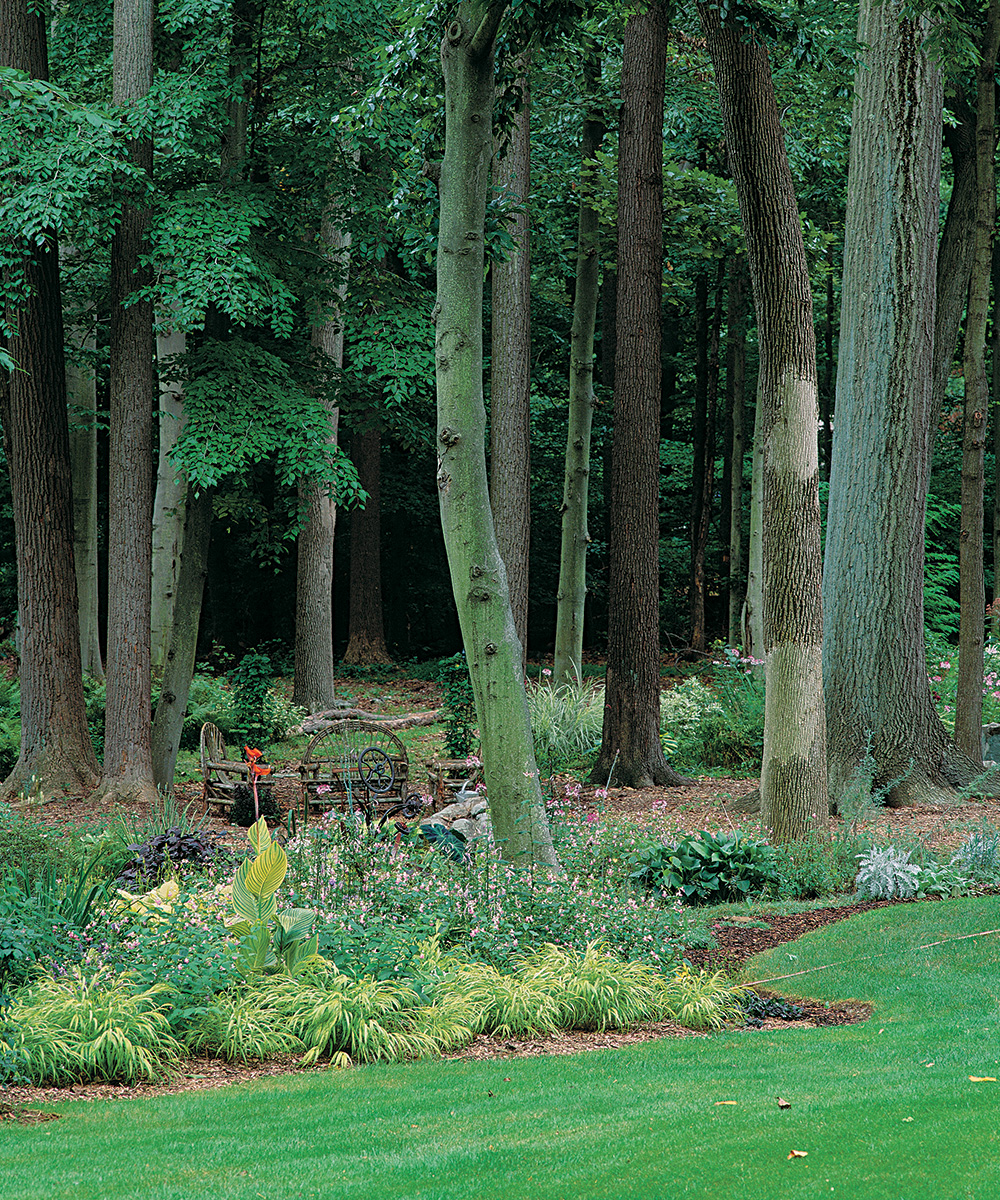
With all the scrub growth removed, we discovered a dry, rocky berm at the outermost edge of the area. A natural creek bed flowed along one side of the berm, fed by underground springs and street runoff. This natural hollow followed a slight downhill course, meandered around an elevated stand of mature oak, ash, and beech trees, and continued downward to empty into a creek that runs on the very edge of our property. It was an area of lovely natural beauty and wonderful potential.
I turned over all the soil to check its contents and also to aerate it. It looked like the perfect place to plant. Like most wooded areas, it contained a lot of natural compost from the many years of dumping and leaf fall. I noticed that in some places, the soil was perfectly loamy and moist, but in other spots, below a layer of humus, the soil was like gray cheese—so dense you could cut it with a knife. If you’re faced with heavy clay soil, like mine, work in as much organic matter as you can. It’s likely that if the area is wooded, you’ll have a good supply of leaf mold and compost on hand.
Provide drainage for rain and runoff
I’ve come to learn that water can be a blessing, but if left uncontrolled, it can also be a curse, washing away topsoil and plantings. We soon had our first test—a week of heavy rain right after the clearing was done. I did a lot of sloshing about with my umbrella to check where all the runoff areas were. The soil that had been turned over was so saturated it was the consistency of cooked oatmeal. I dug drainage channels that benefited the garden in two ways: They allowed the water to run off, and they raised the soil level in the surrounding areas, helping it to drain more easily. The channels are about one foot wide and deep. This was pretty much a trial and error procedure—just when I thought I had all the runoffs figured out, it would rain again and new ones would develop.
All of that water needed a place to go, so I created a natural pond next to the berm. I dug out an area about 20 feet long, 10 feet wide, and 18 inches deep, tossing the soil on the edges for planting. The excavation unearthed rocks of various sizes that were used to line the edges of the pond. Then I built a spillway that would channel water overflow toward the stream. Drainage problems solved, the soil was ready for planting.
If you have a wet site without the benefit of a natural place for the water to go, like a stream, you’ll have to create a solution. It would probably be wise to consult a landscape professional about installing drainage and perhaps a dry well to handle water runoff.
Choose plants that thrive in soggy soil
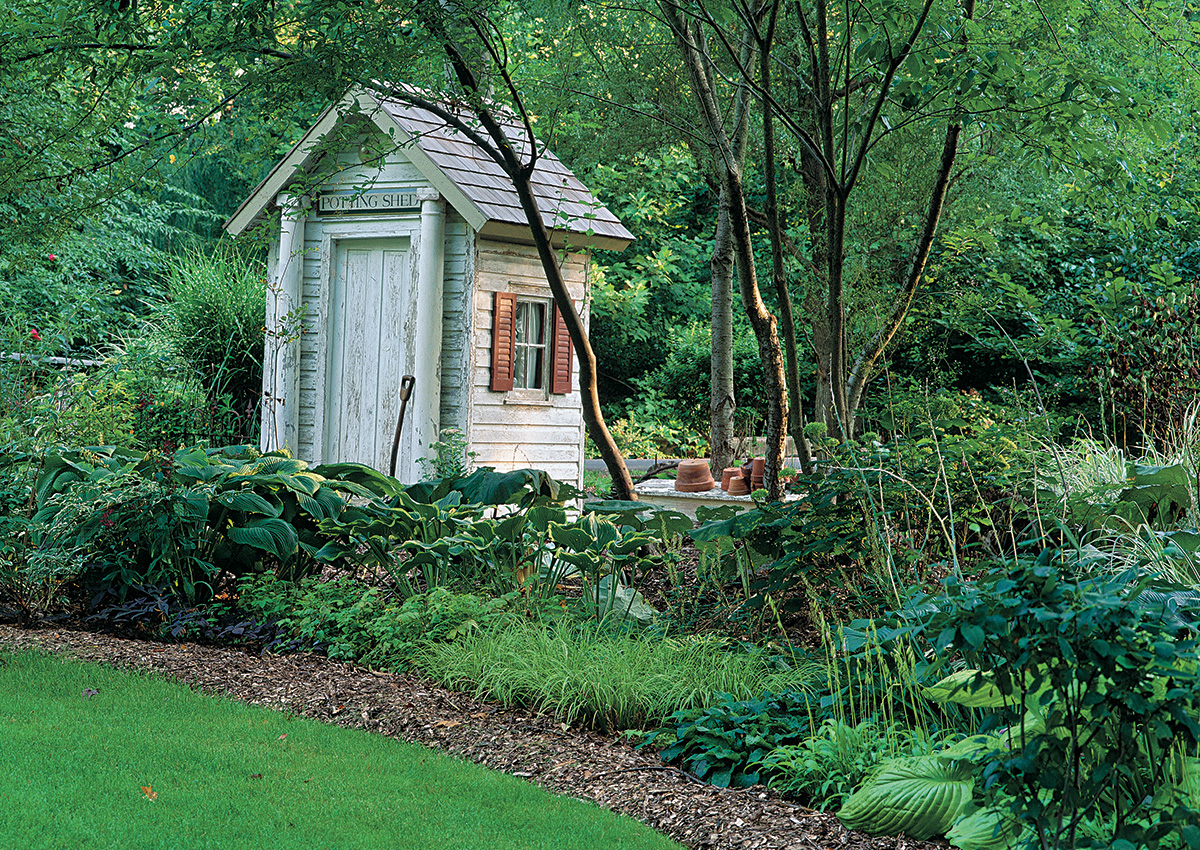
There is no greater delight to a true plant lover than a new garden with lots of room for planting. But before beginning any design, it’s a good idea to look at the garden’s existing structure and surroundings. The finest specimen in my damp, shady garden is a towering oak that stands in the group of trees next to the pond. In my mind, it became essential that any new plantings carry the eye to this majestic tree. Therefore, I designed the beds to be low, so as not to obscure the trees beyond. This also maintains the calm, wooded feeling of the area, as the tall trees still dominate the big picture, and the new understory plantings create a soothing carpet of foliage and texture.
I was thrilled at the prospect of experimenting with plants in these damp, shady conditions. And, happily, I discovered many plants that are perfectly at home in moist soil (see “Good Plants for Moist Soil and Shade,” below). Many of them were transplanted from other gardens on our property with more normal soil conditions.
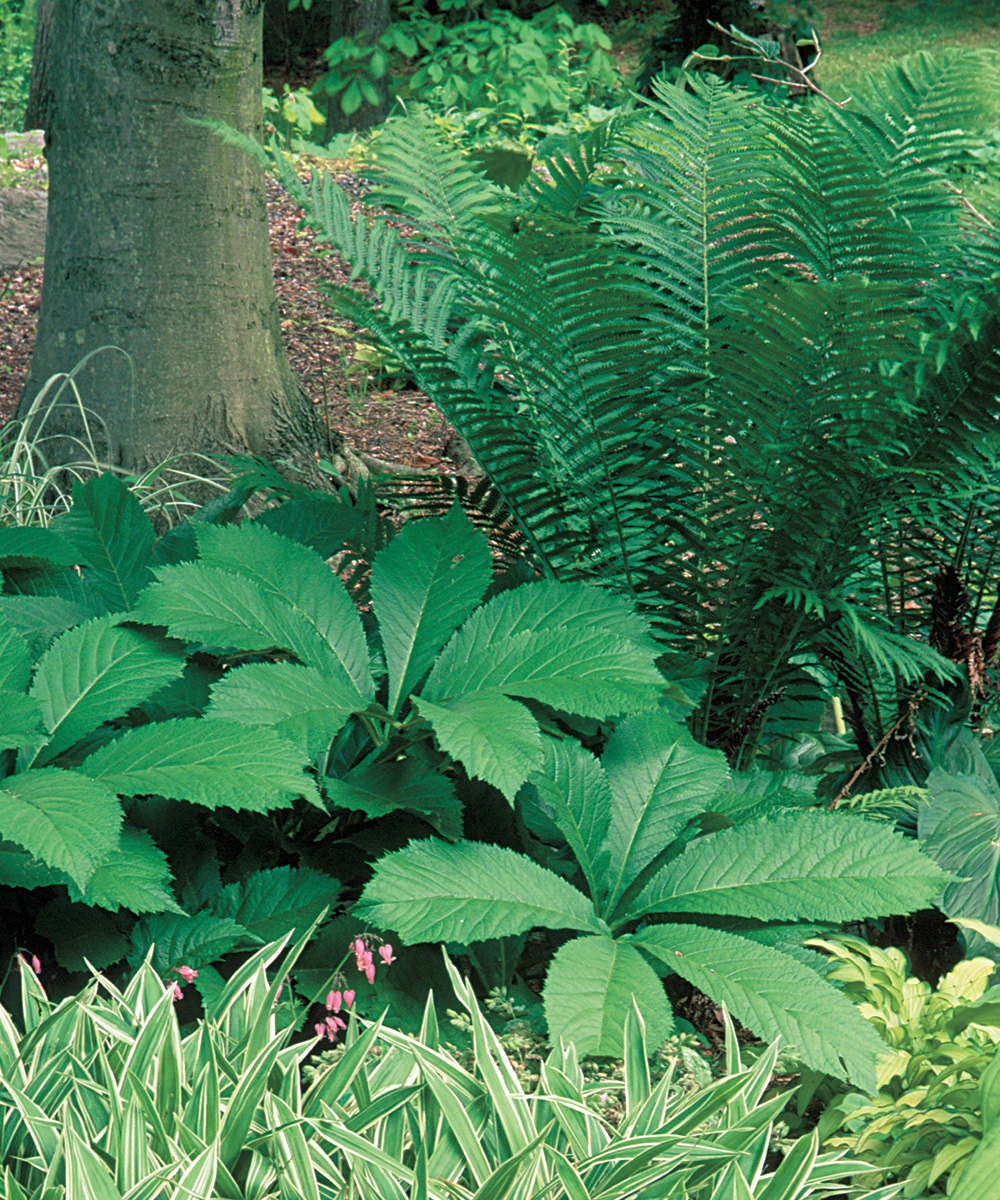
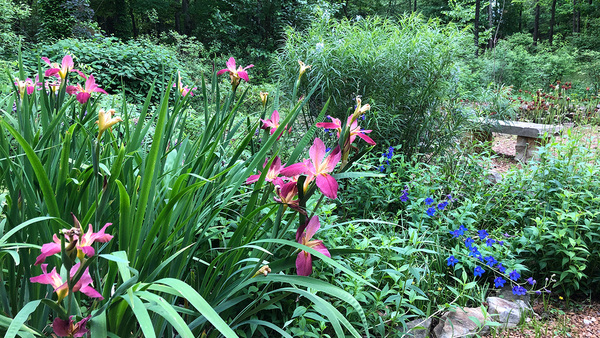
To keep the informal feeling of the woods, I planted in large, natural drifts, grouping five or more specimens of one species together. In a shade garden, foliage and texture play starring roles in design, while flowers are secondary. In early spring, the bright magenta blossoms of Japanese primroses (Primula japonica) rim the pond and streamside, but the rest of the year the gardens are dominated by plants with bold leaves, like hostas, golden meadowsweet (Filipendula ulmaria ‘Aurea’), and Ligularia stenocephala ‘The Rocket’. The large foliage is offset by contrasting, feathery ferns and fine-leaved sedges.
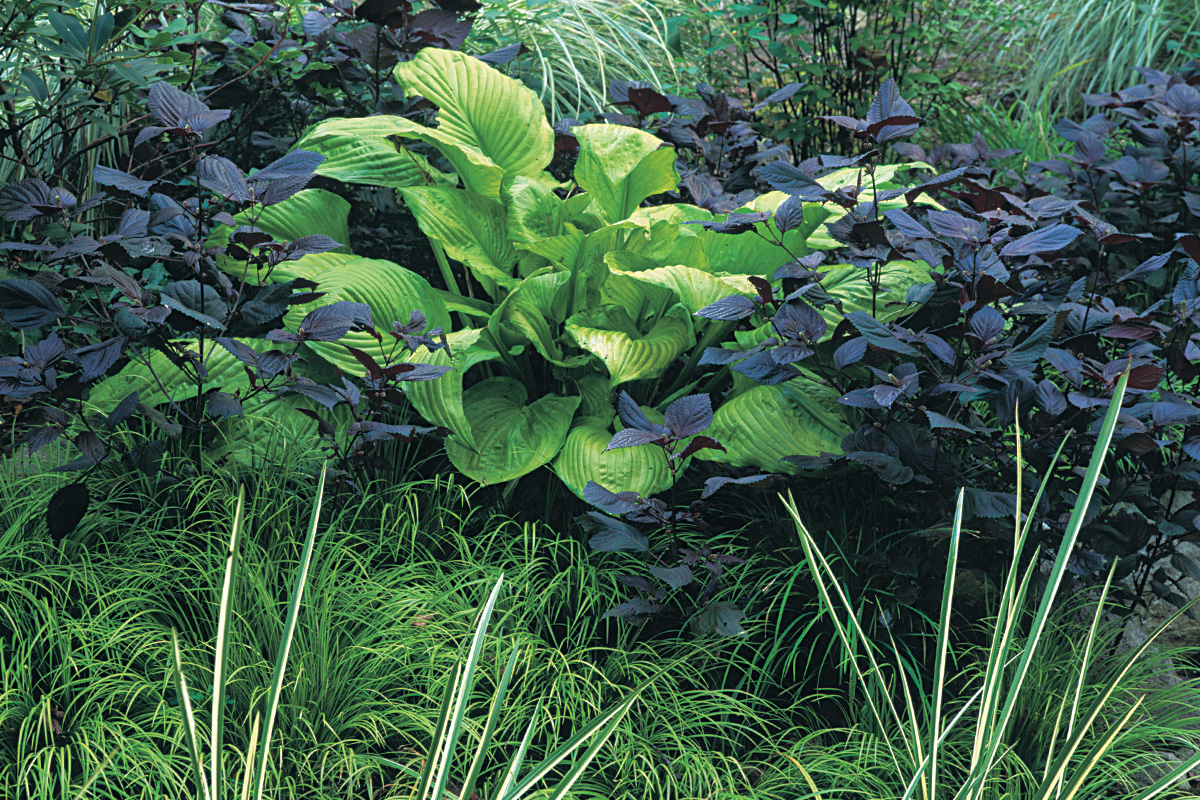
I like to combine plants with similar foliage color that have contrasting leaf shapes and textures. For example, near a boulder path that weaves through the wettest area of the garden, I’ve planted golden grassy-leaved sweet flag (Acorus gramineus ‘Minimus Aureus’). Though this plant is only 3 inches tall, it stands out because of its bright chartreuse color. The same color is repeated nearby in the taller Acorus gramineus ‘Oborozuki’ and the magnificent leaves of ‘Sum and Substance’ hosta. A similar hue is picked up in the taller upright leaves of Iris pseudacorus.
There is only a handful of bulbs that do well in damp garden conditions. In the springtime, checkered lily (Fritillaria meleagris), quamash (Camassia leichtlinii), and summer snowflake (Leucojum aestivum) add a touch of understated elegance to tufts of emerging perennials. American turkscap lily (Lilium superbum) grows 6 to 8 feet tall in the damp, humus-rich soil and has reddish-orange summer flowers. I also add some tropical interest with tender perennials that enjoy the wet earth, like Canna ‘Pretoria’, Colocasia ‘Black Magic’, and Colocasia esculenta ‘Illustris’.
Clean beds in fall and the pond in summer
By far, the most important maintenance work this garden requires is good fall cleanup. The combination of dampness and leaf cover can lead quickly to crown rot, fungus, and mildew problems from lack of air circulation. So every fall, we rake out fallen leaves and cut back all of the perennials except the grasses, which are left standing for winter interest.
After the garden is cleaned out, I spread a thick layer of mulch around the plants. We use wood chips that are delivered free of charge to us by local tree trimmers. The coarse texture of the chips is beneficial to the damp earth; as they get worked into the soil over the course of the season they add air pockets to the heavy clay. In spring, I broadcast a slow-release fertilizer on the beds, and also apply well-aged horse manure or compost to plants that are heavy feeders.
The drainage channels also need to be dug out about once a year. I walk through them with a narrow spade, digging as I go and tossing the sandy silt that’s accumulated in them directly into the garden. Every few years, I also clean the pond of fallen leaves and silt, tossing the debris onto the banks to enrich surrounding plantings. This task is most easily accomplished in late summer, as the pond tends to dry up by then.
I’ve gained immense pleasure and satisfaction in claiming this wet, wild, wonderful place. And that old saying is true: Sometimes it’s hard to see the forest for the trees. I didn’t see the true potential and beauty of this space for years, but then one fine day I met Russ Walters.







Comments
I have just cleared a shaded area fifty by twenty foot,with a running tidal stream, any plants to fit in quickly?
Log in or create an account to post a comment.
Sign up Log in