Midwest
Photo/Illustration: Michelle Gervais
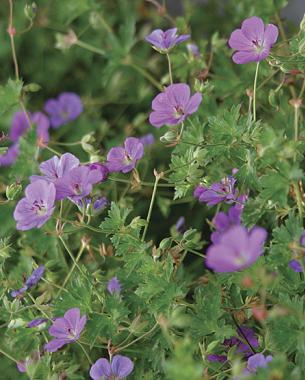
30%: ‘Rozanne’ hardy geranium (Geranium ‘Rozanne’, USDA Hardiness Zones 5–8)
27%: ‘Rocky Top’ Tennessee coneflower (Echinacea tennesseensis ‘Rocky Top’, Z 3–9)
24%: ‘David’ garden phlox (Phlox paniculata ‘David’, Z 4–8)
11%: ‘Little Joe’ Joe Pye weed (Eupatorium dubium ‘Little Joe’, Z 3–9)
8%: ‘Fireworks’ goldenrod (Solidago rugosa ‘Fireworks’, Z 5–9)
Voter comment: There are no downsides to the prolific blue-violet blooms, healthy foliage, and ultrapolite spreading habit of ‘Rozanne’ hardy geranium. It is an award winner that should be welcome in any perennial bed.
—Cheryl Crawford, Harshaw, Wisconsin
Mid-Atlantic

Photo/Illustration: Michelle Gervais
26%: ‘Rozanne’ hardy geranium (Geranium ‘Rozanne’, Zones 5–8)
25%: ‘Becky’ Shasta daisy (Leucanthemum × superbum ‘Becky’, Z 5–8)
20%: ‘Walker’s Low’ catmint (Nepeta × faassenii ‘Walker’s Low’, Z 4–8)
16%: ‘Caradonna’ salvia (Salvia nemorosa ‘Caradonna’, Z 5–9)
13%: ‘Arizona Sun’ blanket flower (Gaillardia aristata ‘Arizona Sun’, Z 3–9)
Voter comment: This geranium’s mounding habit and long bloom time provide a good foundation for other plants in my garden. The flowers look lovely combined with either pastels or bright colors. ‘Rozanne’ is a real workhorse.
—Kim Scott, Vienna, Virginia
South

Photo/Illustration: Michelle Gervais
31%: ‘Becky’ Shasta daisy (Leucanthemum × superbum ‘Becky’, Zones 5–8)
30%: ‘Happy Returns’ daylily (Hemerocallis ‘Happy Returns’, Z 3–9)
16%: ‘Sunray’ coreopsis (Coreopsis grandiflora ‘Sunray’, Z 4–9)
14%: ‘Rozanne’ hardy geranium (Geranium ‘Rozanne’, Z 5–8)
9%: ‘Purple Dome’ New England aster (Aster novae-angliae ‘Purple Dome’, Z 4–8)
Voter comment: I chose ‘Becky’ Shasta daisy because it blooms all summer. Most gardeners depend on their annuals to do that, but I like the consistency and dependability of my perennials. ‘Becky’ also has a pop of white that draws my eye to it.
—Darlene Tanner, Medina, Tennessee
Gulf Coast

Photo/Illustration: Courtesy of Bob Cook
35%: Butterfly weed (Asclepias tuberosa, Zones 4–9)
25%: ‘Purple Showers’ Mexican petunia (Ruellia brittoniana ‘Purple Showers’, Z 8–11)
22%: Mexican bush sage (Salvia leucantha, Z 9–11)
10%: Blanket flower (Gaillardia pulchella and cvs., Z 10–11)
8%: Blue porter weed (Stachytarpheta urticifolia, Z 9–11)
Voter comment: Butterfly weed is my region’s best flower for sun because its flowers are attractive, it is heat and drought tolerant, and its leaves’ toxic sap is tolerated by hungry monarch butterfly larvae, thus making them inedible to predators.
—Sigrid Benson, Gulf Breeze, Florida
Northeast

Photo/Illustration: Jennifer Benner
32%: ‘Autumn Joy’ sedum (Sedum ‘Autumn Joy’, Zones 3–11)
26%: ‘Becky’ Shasta daisy (Leucanthemum × superbum ‘Becky’, Z 5–8)
18%: ‘Firewitch’ cheddar pink (Dianthus gratianopolitanus ‘Firewitch’, Z 3–8)
13%: ‘Zagreb’ coreopsis (Corepsis verticillata ‘Zagreb’, Z 4–9)
11%: ‘Kobold’ liatris (Liatris spicata ‘Kobold’, Z 4–9)
Voter comment: ‘Autumn Joy’ sedum is cold hardy, drought tolerant, and disease resistant. Nothing seems to eat it above or below the ground. Even if ignored the rest of the year, ‘Autumn Joy’ will reward you with flowers that brighten a fading, latesummer garden.
—Liz Stanley, West Suffield, Connecticut
Upper Plains

Photo/Illustration: Jennifer Benner
35%: ‘Magnus’ purple coneflower (Echinacea purpurea ‘Magnus’, Zones 3–9)
24%: Tall bearded iris (Iris cvs., Z 3–8)
15%: ‘Bluebird’ delphinium (Delphinium ‘Bluebird’, Z 3–7)
14%: ‘Becky’ Shasta daisy (Leucanthemum × superbum ‘Becky’, Z 5–8)
12%: Gloriosa daisy (Rudbeckia hirta cvs., Z 3–8)
Voter comment: For me, ‘Magnus’ purple coneflower has a strong upright habit and long bloom time. Goldfinches love the seeds in fall, and in winter, the snow sits precariously on whatever the birds don’t eat.
—Cindy Tate, Omaha, Nebraska
Lower Plains

Photo/Illustration: Michelle Gervais
45%: ‘Goldsturm’ black-eyed Susan (Rudbeckia fulgida var. sullivantii ‘Goldsturm’, Zones 4–9)
21%: Autumn sage (Salvia greggii and cvs., Z 7–9)
13%: Gaura (Gaura lindheimeri and cvs., Z 6–9)
11%: Louisiana iris (Iris spp. and cvs., Z 6–9)
10%: Blackfoot daisy (Melampodium leucanthum, Z 7–11)
Voter comment: ‘Goldsturm’ black-eyed Susan is one of the few flowers that is perky and happy in our hottest, driest summers here in eastern Kansas. It naturalizes well and blends in with my other natives. And its bright color and long-stemmed heads are nice to add to arrangements.
—Joan Vibert, Ottawa, Kansas
Southwest

Photo/Illustration: Courtesy of High Country Gardens
29%: Cardinal penstemon (Penstemon cardinalis, Zones 5–9)
26%: Hummingbird mint (Agastache cana, Z 6–11)
24%: Germander sage (Salvia chamaedryoides, Z 7–11)
14%: Desert globemallow (Sphaeralcea ambigua, Z 6–10)
7%: Desert zinnia (Zinna grandiflora, Z 4–9)
Voter comment: I chose cardinal penstemon because it grows readily in our compacted clay soil. Penstemon likes our hot, dry summers, and hummingbirds love to sip nectar from the red flowers.
—Irma Rudolph, Sun City, California
Northwest

Photo/Illustration: Jennifer Benner
32%: ‘Matrona’ sedum (Sedum telephium ‘Matrona’, Zones 4–9)
22%: Gaura (Gaura lindheimeri and cvs., Z 6–9)
20%: ‘Devil’s Tears’ phygelius (Phygelius × rectus ‘Devil’s Tears’, Z 8–9)
16%: Knautia (Knautia macedonica, Z 5–9)
10%: Sticky Jerusalem sage (Phlomis russeliana, Z 3–9)
Voter comment: I believe that ‘Matrona’ sedum is best because it is drought tolerant, provides multiseasonal interest, and has a great leaf shape to play off ornamental grasses.
—Hollye Maxwell, Portland, Oregon
Rocky Mountains

Photo/Illustration: David Salman/High Country Gardens
30%: Desert Sunrise® hyssop (Agastache Desert Sunrise®, Zones 5–10)
26%: Variegated sweet iris (Iris pallida ‘Variegata’, Z 4–9)
25%: ‘Indian Summer’ brown-eyed Susan (Rudbeckia hirta ‘Indian Summer’, Z 4–9)
12%: Oriental fountain grass (Pennisetum orientale, Z 5–10)
7%: Mesa Verde® ice plant (Delosperma ‘Kelaidis’, Z 4–8)
Voter comment: I chose Desert Sunrise® hyssop because it blooms during summer, is xeric, and attracts hummingbirds. Even better is that it’s low maintenance and good looking.
—Sue O’Neill, Colorado Springs, Colorado


Comments
I would like to say this is really a best option for the users unscramble words solver because here we can choose our requirement which is really amazing scheme for everyone. Thanks a lot for give good space to the users.
Perennials flower plants are good for making a garden for sunny day.But Autumn is the perfect season for planting various types of flowers.They have More Bonuses for writing unique articles for explaining the appropriate procedure of gardening.
Here comes the sun! These full sun perennials will thrive in a garden with lots of light. Check us here parking lot striping contractor seattle wa
Never appreciated flowers until now! WOW! check us out
Log in or create an account to post a comment.
Sign up Log in