previous
  • Indeterminate or Determinate Tomatoes?
    Indeterminate or Determinate Tomatoes?
  • Colorful Selections for Shade
    Colorful Selections for Shade
  • Thoughts From a Foreign Field
    Thoughts From a Foreign Field
  • Fast-Growing Trees for Impatient Gardeners
    Fast-Growing Trees for Impatient Gardeners
  • Elephant's Ears
    Elephant's Ears
  • Stylish Shady Containers
    Stylish Shady Containers
  • Designing with Curved Terraces
    Designing with Curved Terraces
  • Pretty in Pink
    Pretty in Pink
  • Containers as Focal Points
    Containers as Focal Points
  • Fragrant Plants for Pathways
    Fragrant Plants for Pathways
  • Mulch for a Healthy Garden
    Mulch for a Healthy Garden
  • 6 Tips for Weed Control
    6 Tips for Weed Control
  • Plants that Spark!
    Plants that Spark!
  • Homegrown / Homemade
    Homegrown / Homemade
  • Building a Compost Bin
    Building a Compost Bin
  • Slideshow: Beautiful Clematis
    Slideshow: Beautiful Clematis
  • Garden Confidential: A Plant Walks into a Bar
    Garden Confidential: A Plant Walks into a Bar
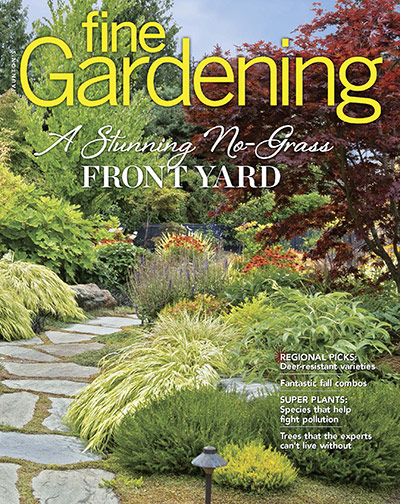
  • Lawn Alternatives
    Lawn Alternatives
  • In Pursuit of the Perfect Potting Shed
    In Pursuit of the Perfect Potting Shed
  • NEW Video Series: There's a Better Way
    NEW Video Series: There's a Better Way
  • Make a Succulent Topiary
    Make a Succulent Topiary
  • Dwarf Citrus Trees
    Dwarf Citrus Trees
  • Plant an Easy-to-Water Strawberry Jar
    Plant an Easy-to-Water Strawberry Jar
  • Save Money by Growing Your Own
    Save Money by Growing Your Own
  • Comfortable Alfresco Dining
    Comfortable Alfresco Dining
next

Browse Plants

Narrowed By:Flower Color: Yellow+ Foliage: Evergreen
Displaying 1 - 20 of 29 listings   1 | 2View AllNext > Sort By: Sort
Argyranthemum frutescens Argyranthemum frutescens
(1 user review)
Hardiness Zones: 1 2 3 4 5 6 7 8 9 10 11

Argyranthemum is often mistaken for or offered as Chrysanthemum. It is a great plant in containers where it isn't hardy. A. 'Jamaica Primrose' and A. 'Vancouver' will survive in Zones 7-11.

Berberis × stenophylla 'Corallina Compacta' Berberis × stenophylla 'Corallina Compacta'
(Compact coral barberry)
Be the first to rate this plant
Hardiness Zones: 1 2 3 4 5 6 7 8 9 10 11

"Thorny but irresistible" best describes this low-maintenance, elfin barberry. Tiny leaves are smothered in coral-colored buds opening to bright yellow-orange spring flowers. These, in turn, produce silver-frosted, blue-black berries in fall. 'Corallina Compacta' is evergreen, tolerates most soil types, and is pest-free and drought tolerant once established.

Bignonia capreolata 'Tangerine Beauty' Bignonia capreolata 'Tangerine Beauty'
('Tangerine Beauty' cross vine)
Be the first to rate this plant
Hardiness Zones: 1 2 3 4 5 6 7 8 9 10 11

A better-behaved cousin to the less-than-polite trumpet vine, cross vine is a colorful solution for a fence or arbor with afternoon shade. Although this east Texas native is slow to establish, ‘Tangerine Beauty’ sports brighter, showier flowers than other cultivars and will reward your patience with loads of orange blooms in both spring and fall. Flowers bloom on old wood, so prune this vine immediately only after blooms fade. -Leslie Finical Halleck, Fine Gardening #147 (October 2012), page 74

Brugmansia 'Charles Grimaldi' Brugmansia 'Charles Grimaldi'
(Gold angels' trumpets)
(2 user reviews)
Hardiness Zones: 1 2 3 4 5 6 7 8 9 10 11

Foot-long blossoms are nocturnally fragrant, and pour out from narrow calyces of light yellow, to terminate in fluted, reflexed openings the hues of golden summer squash.

Brugmansia suaveolens Brugmansia suaveolens
(Angels' trumpet)
(2 user reviews)
Hardiness Zones: 1 2 3 4 5 6 7 8 9 10 11

Few plants evoke tropicalia quite like the Brugmansias, with their voluminous tubular flowers that drip from imposing shrubs or small trees. They look fantastic in containers or plunged into a border, and the dramatic display persists from late spring until autumn. In cooler climates, they may be brought under glass or cut back and held dormant in a cool basement.  All parts are highly toxic if ingested.

Carpobrotus edulis Carpobrotus edulis
(Iceplant, Hottentot fig, Kaffir fig)
Be the first to rate this plant
Hardiness Zones: 1 2 3 4 5 6 7 8 9 10 11

This ground-hugging succulent perennial roots at the nodes, has a creeping habit, and often forms deep mats covering large areas. It produces abundant yellow daisy-like flowers that open at noon and turn pink later in the day.

Draba aizoides Draba aizoides
(Yellow whitlow grass)
Be the first to rate this plant
Hardiness Zones: 1 2 3 4 5 6 7 8 9 10 11

Yellow whitlow grass is a small, semi-evergreen perennial perfect for growing in a trough, rock wall, or xeric bed. It grows to only 4 inches high and twice as wide. This delightful, drought-tolerant miniature has spiny rosettes of lustrous green leaves through the winter and cheerful yellow flowers in early spring.

Ephedra equisetina Ephedra equisetina
(Bluestem joint fir)
Be the first to rate this plant
Hardiness Zones: 1 2 3 4 5 6 7 8 9 10 11

A member of the conifer clan, Ephedra equisetina is commonly called bluestem joint fir due to its finely textured blue stems. In spring, it features a conspicuous froth of yellow blooms that are often followed by red berries. It is perfect for naturalized areas since it reliably spreads.

Eriogonum umbellatum Eriogonum umbellatum
(Sulfur flower)
Be the first to rate this plant
Hardiness Zones: 1 2 3 4 5 6 7 8 9 10 11

Wild buckwheats have assumed star roles in drought-tolerant landscapes throughout the West, and none is more useful than sulfur flower. It has wonderful evergreen foliage with brilliant blooms from late spring through late summer. Long-lived, this perennial is so adaptable that it also thrives in humid climates.

Euphorbia amygdaloides var. robbiae Euphorbia amygdaloides var. robbiae
(Mrs. Robb's bonnet)
Be the first to rate this plant
Hardiness Zones: 1 2 3 4 5 6 7 8 9 10 11

This variety has dark, glossy evergreen leaves arranged in tight rosettes, and it produces yellow-green bracts in mid-spring and early summer.

no image available Euphorbia characias
(1 user review)
Hardiness Zones: 1 2 3 4 5 6 7 8 9 10 11

This upright, evergreen shrub has stunning texture and form. Its gray-green leaves and woolly, purple-tinged stems form billowy, 4-foot long branches. From early spring to early summer, it produces giant cylindrical bract clusters in yellow-green with purple-black nectar glands, and creates a specimen that looks otherworldly.

no image available Euphorbia myrsinites
(Myrtle spurge)
(1 user review)
Hardiness Zones: 1 2 3 4 5 6 7 8 9 10 11

Long-lasting, terminal clusters of lime green bracts and flowers punctuate the meandering 'arms' of this ground-hugging species. The chalky seafoam foliage looks great spilling over a stone wall in a rock garden or at the edge of any bed.

no image available Euphorbia rigida
Be the first to rate this plant
Hardiness Zones: 1 2 3 4 5 6 7 8 9 10 11

This species is similar to E. myrsinites, but its habit is first erect before spreading, and its steely blue leaves are more narrow and pointed. It also bears terminal yellow bracts from early spring to summer.

no image available Farfugium japonicum 'Crispatum'
(Farfugium)
Be the first to rate this plant
Hardiness Zones: 1 2 3 4 5 6 7 8 9 10 11

This evergreen foliage plant has large, leathery leaves and daisy-like yellow flowers. It looks great in the border or in containers. 

Geum 'Mango Lassi' Geum 'Mango Lassi'
('Mango Lassi' geum)
Be the first to rate this plant
Hardiness Zones: 1 2 3 4 5 6 7 8 9 10 11

This evergreen perenial grows to 4 to 16 inches tall and 12 to 24 inches wide and blooms from late spring to fall (with deadheading) with double flowers in shades of apricot and buttery yellow.

Helleborus × hybridus cvs. Helleborus × hybridus cvs.
(Hellebore)
Be the first to rate this plant
Hardiness Zones: 1 2 3 4 5 6 7 8 9 10 11

From late fall through winter, the leathery leaves of hellebores stay glossy, cheery, and green. Hybrids of H. orientalis and other species have a clump-forming habit and leathery leaves. They begin blooming in February or March in a range of shades, adding much needed color very early in the season. The blooms last for a very long time, especially if the weather stays cool. Hellebores are tolerant of summer heat and humidity. -Marty Hair, Regional Picks: Upper Midwest, Fine Gardening issue# 127

Helleborus odorus Helleborus odorus
(Fragrant hellebore)
Be the first to rate this plant
Hardiness Zones: 1 2 3 4 5 6 7 8 9 10 11

Lime-green to near-yellow flowers 1 to 2 inches across, with five petal-like sepals, are borne in loose clusters of three or four on leafy stems up to 20 inches tall. Blooms emerge in late winter or early spring, fading to pale green and lasting until seeds are ripe. There is great variation in fragrance, flower color and size, as well as leaf form, across different plants.

Hemerocallis 'Forsyth Lemon Drop' Hemerocallis 'Forsyth Lemon Drop'
(Daylily)
Be the first to rate this plant
Hardiness Zones: 1 2 3 4 5 6 7 8 9 10 11

'Forsyth Lemon Drop' is lovely and cheerful daylily cultivar.

Mahonia × media 'Charity' Mahonia × media 'Charity'
('Charity' mahonia)
Be the first to rate this plant
Hardiness Zones: 1 2 3 4 5 6 7 8 9 10 11

Few shrubs offer flowers as late as this one, which starts blooming in late October or early November. The upright, 10- to 12-inch-wide flower clusters last until January or February, then give way to long strings of dark purple fruit that the birds devour. The evergreen foliage is so architectural, 'Charity' would be a spectacular shrub even if it didn't bloom. Some years, the leaves turn red, but instead of relying on it, consider it a pleasant surprise when it happens.

Mahonia bealei Mahonia bealei
(Leatherleaf mahonia, Beale's barberry)
Be the first to rate this plant
Hardiness Zones: 1 2 3 4 5 6 7 8 9 10 11

Leatherleaf mahonia  is a thick shrub with a formal feel. Its stiff, green-blue foliage looks something like holly foliage, and in spring, airy clusters of tiny, golden yellow flowers appear. These are followed in fall by inky blue berries. Consider this plant for a a mixed-shrub foundation planting, or use it as a hedge plant. -Nellie Neal, Regional Picks: Southeast, Fine Gardening issue #127


Displaying 1 - 20 of 29 listings   1 | 2View AllNext > Sort By: Sort