previous
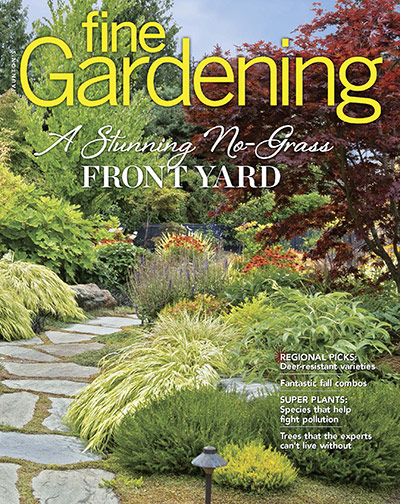
  • Lawn Alternatives
    Lawn Alternatives
  • Slideshow: Beautiful Clematis
    Slideshow: Beautiful Clematis
  • Mulch for a Healthy Garden
    Mulch for a Healthy Garden
  • Colorful Selections for Shade
    Colorful Selections for Shade
  • NEW Video Series: There's a Better Way
    NEW Video Series: There's a Better Way
  • Dwarf Citrus Trees
    Dwarf Citrus Trees
  • Homegrown / Homemade
    Homegrown / Homemade
  • Elephant's Ears
    Elephant's Ears
  • Comfortable Alfresco Dining
    Comfortable Alfresco Dining
  • Thoughts From a Foreign Field
    Thoughts From a Foreign Field
  • Plant an Easy-to-Water Strawberry Jar
    Plant an Easy-to-Water Strawberry Jar
  • Designing with Curved Terraces
    Designing with Curved Terraces
  • Fast-Growing Trees for Impatient Gardeners
    Fast-Growing Trees for Impatient Gardeners
  • 6 Tips for Weed Control
    6 Tips for Weed Control
  • Indeterminate or Determinate Tomatoes?
    Indeterminate or Determinate Tomatoes?
  • Make a Succulent Topiary
    Make a Succulent Topiary
  • Garden Confidential: A Plant Walks into a Bar
    Garden Confidential: A Plant Walks into a Bar
  • Containers as Focal Points
    Containers as Focal Points
  • Fragrant Plants for Pathways
    Fragrant Plants for Pathways
  • Stylish Shady Containers
    Stylish Shady Containers
  • Pretty in Pink
    Pretty in Pink
  • Save Money by Growing Your Own
    Save Money by Growing Your Own
  • Building a Compost Bin
    Building a Compost Bin
  • Plants that Spark!
    Plants that Spark!
  • In Pursuit of the Perfect Potting Shed
    In Pursuit of the Perfect Potting Shed
next

Browse Plants

Narrowed By:Type: Perennials+ Uses: Beds and Borders + Moisture: Medium
Displaying 1 - 20 of 419 listings   1 | 2 | 3 | 4 | 5 | 6 | 7 | 8 | 9 | 10 | 11 | 12 | 13 | 14 | 15 | 16 | 17 | 18 | 19 | 20 | 21View AllNext > Sort By: Sort
Acanthus mollis Acanthus mollis
(Bear's breeches)
(5 user reviews)
Hardiness Zones: 1 2 3 4 5 6 7 8 9 10 11

Acanthus mollis is prized for its bold clumps of shiny green leaves topped with striking, 3-foot-tall spires of white flowers which are clasped by showy purple bracts. This is a great plant for an eye-catching structural element in a part-shade border.

Acanthus mollis 'Tasmanian Angel' Acanthus mollis 'Tasmanian Angel'
(Bear's breeches)
(1 user review)
Hardiness Zones: 1 2 3 4 5 6 7 8 9 10 11

With their white margins and mottling, the jagged leaves of 'Tasmanian Angel' are a real showshopper, and in late summer, 3-foot-tall, pink-and-cream flower stalks heighten the effect. The variegation may be less pronounced as the leaves age, but the plant still draws the eye. Use it as a multiseason container specimen or as a bedding plant. -Allan Armitage, Plants to know and grow, Fine Gardening issue #119

Achillea millefolium 'Apricot Delight' Achillea millefolium 'Apricot Delight'
('Apricot Delight' yarrow)
(1 user review)
Hardiness Zones: 1 2 3 4 5 6 7 8 9 10 11

'Apricot Delight' has deep reddish apricot blooms that then mature to a pale salmon, and they harmonize well with other colors. 'Apricot Delight' has a long blooming season (from early to late summer, with deadheading). This cultivar is smaller than most yarrows, and the blooms make nice cut flowers. -Allan Armitage, Plants to know and grow, Fine Gardening issue #121

Actaea pachypoda Actaea pachypoda
(White baneberry, White cohosh)
(1 user review)
Hardiness Zones: 1 2 3 4 5 6 7 8 9 10 11

This 3-foot-tall and 2-foot-wide clumping perennial displays spiky racemes of white flowers in late spring and early summer followed by bright white berries with dark tips on bright red stalks. The berries are exceptionally showy and especially effective in shady woodland beds.

Actaea racemosa Actaea racemosa
(Black cohosh, Black snakeroot, Bugbane)
Be the first to rate this plant
Hardiness Zones: 1 2 3 4 5 6 7 8 9 10 11

Actaea racemosa is a native woodland perennial with white, somewhat fuzzy flowers in midsummer that wave above astilbe-like, deeply cut foliage. The flowers can be unpleasantly scented, thus the name "bugbane." Formerly in the genus Cimicifuga, this plant is great for use in a woodland garden or moist border.

Actaea rubra Actaea rubra
(Red baneberry, Snakeberry)
(1 user review)
Hardiness Zones: 1 2 3 4 5 6 7 8 9 10 11

Actaea rubra bears white flowers from spring to early summer on plants up to 2 feet tall and 1 foot wide. In late summer, glossy red berries develop. A few cultivars exist. This woodland perennial is native to the U.S.

Actaea simplex Actaea simplex
(Autumn bugbane, Autumn snakeroot)
(3 user reviews)
Hardiness Zones: 1 2 3 4 5 6 7 8 9 10 11

This clumping woodland perennial with deep green foliage up to 4 feet tall and 2 feet wide bears spikes of  fragrant white flowers 1 to 2 feet long in fall. Cultivars exist with varying leaf colors and forms.

Actaea simplex 'Brunette' Actaea simplex 'Brunette'
(Baneberry, Snakeroot)
(1 user review)
Hardiness Zones: 1 2 3 4 5 6 7 8 9 10 11

This chocolate-leaved cultivar up to 4 feet tall and 2 feet wide bears compact spikes of white flowers in late summer. This plant may languish in very warm temperatures. The flowers remain ornamental for three to four weeks.

Actaea simplex ‘Hillside Black Beauty’ Actaea simplex ‘Hillside Black Beauty’
(Bugbane, Autumn snakeroot, black cohosh)
Be the first to rate this plant
Hardiness Zones: 1 2 3 4 5 6 7 8 9 10 11

Unlike other bugbanes, 'Hillside Black Beauty' offers deep purple-black foliage. From late spring to late summer, its dark hue makes a wonderful backdrop for colorful foliage and flowering shade plants. In fall, fragrant, cream-colored flowers appear on tall, wandlike stems. An added plus: this plant is deer resistant. --Michael Ruggiero, Regional Picks: Mid-Atlantic, Fine Gardening issue #127

Agastache ‘Tutti Frutti’ Agastache ‘Tutti Frutti’
(1 user review)
Hardiness Zones: 1 2 3 4 5 6 7 8 9 10 11

This is an erect, bushy perennial with scented gray-green leaves. Its raspberry-red flowers grow on loose, foot-long spikes from midsummer to late fall. The flower spikes have a long bloom period and attract hummingbirds, butterflies, and other insects.  

Agastache foeniculum Agastache foeniculum
(Anise hyssop)
(2 user reviews)
Hardiness Zones: 1 2 3 4 5 6 7 8 9 10 11

A classic plant for both herb gardens and borders, anise hyssop is composed of erect branches of mint-and-licorice-scented, medium green leaves ending in fuzzy spikes of small lavender flowers. The plant grows to 3 to 5 feet tall and 1 foot wide and reseeds freely. The flowers are edible and are charming crumbled into salads. The flowers are highly attractive to bees, butterflies, and hummingbirds.

Agastache rugosa Agastache rugosa
(Wrinkled giant hyssop, Korean hyssop, purple giant hyssop)
Be the first to rate this plant
Hardiness Zones: 1 2 3 4 5 6 7 8 9 10 11

This 4-foot-tall and 18-ich-wide, bushy perennial, very similar to the more common anise hyssop (Agastache foeniculum) has strongly mint-and-licorice-scented leaves and short spikes of lavender-blue flowers from midsummer to early fall. Unlike most agastaches, both of these species can tolerate more moisture and humity, making them highly suited to climates outside the arid west.

Ajuga reptans Ajuga reptans
(Carpet bugleweed, Common bugleweed)
(1 user review)
Hardiness Zones: 1 2 3 4 5 6 7 8 9 10 11

This fast spreader has dark green leaves with deep blue flowers spring to summer.

Alchemilla alpina Alchemilla alpina
(Alpine lady's mantle)
(2 user reviews)
Hardiness Zones: 1 2 3 4 5 6 7 8 9 10 11

About a third the size of the more well known A. mollis, A. alpina has delicate leaves edged in brilliant silver.

Alchemilla mollis Alchemilla mollis
(Lady's mantle)
(2 user reviews)
Hardiness Zones: 1 2 3 4 5 6 7 8 9 10 11

This plant has lobed, densely hairy, chartreuse foliage that is crimped at the edges. Soft, frothy, yellow-green foliage hovers above the plant from early summer through autumn.

Allium sphaerocephalon Allium sphaerocephalon
(Drumstick allium, Round-headed garlic)
(1 user review)
Hardiness Zones: 1 2 3 4 5 6 7 8 9 10 11

The drumstick allium has egg-shaped flowers in summer that start off green, then bloom and develop to pink and then clover red-purple. These plants are attractive in a bed or border, especially peeking up through other plants, such as roses, so that their nondescript foliage is hidden. Their vertical presence and eye-catching flower shape are valuable additions to the garden, and they naturalize freely.

Allium tuberosum Allium tuberosum
(Chinese chives, Garlic chives)
(1 user review)
Hardiness Zones: 1 2 3 4 5 6 7 8 9 10 11

This plant produces fast-growing, edible, pungent, onion-like leaves. Small, white flowers appear in late summer.

Alocasia micholitziana 'Frydek' Alocasia micholitziana 'Frydek'
(Elephant's ear)
(3 user reviews)
Hardiness Zones: 1 2 3 4 5 6 7 8 9 10 11

Satiny deep green to black leaves and glowing white veins on 18-inch-long leaves make this elephant's ear great in containers, in a shady border, at the edge of a pond, or as a houseplant. It also has pale stalks with purplish banding. 'Frydek' is very tolerant of a range of soil pH, heat, humidity, and heavy soil. It can even take about a half day of sunlight.

Alstroemeria 'Casablanca' Alstroemeria 'Casablanca'
(Peruvian lily)
(1 user review)
Hardiness Zones: 1 2 3 4 5 6 7 8 9 10 11

'Casablanca' Peruvian lily is the closest to white that this genus has gotten as of yet. Inside its amaryllis-shaped white flowers, reddish dashes on a yellow wash and a pale pink throat add interest. 'Casablanca' is also taller than most other Alstroemerias. They make great cut flowers and are frequently used by florists; they also add a tropical feel to beds and borders. Roots are very brittle and care should be taken when planting.

Alternanthera ficoidea 'Red Threads' Alternanthera ficoidea 'Red Threads'
(Joseph's coat, Parrot leaf)
Be the first to rate this plant
Hardiness Zones: 1 2 3 4 5 6 7 8 9 10 11

A. ficoidea ‘Red Threads’ is a slender-leaved perennial selection that doesn't wander, forming a textured carpet in shades of deep burgundy. A single plant makes a mound about 8 inches tall and 14 inches wide. It blooms on and off all year, but you may never notice. The small, pale flower buttons are held in the leaf axils, where they are nearly indistinguishable from the foliage unless you're paying close attention. Use 'Red Threads' at the base of taller plants in the border to provide vibrant color echoes or contrasts. Grow as a warm-season annual in cooler climates, mass the plants in beds, or use in a formal knot garden as the Victorians did.


Displaying 1 - 20 of 419 listings   1 | 2 | 3 | 4 | 5 | 6 | 7 | 8 | 9 | 10 | 11 | 12 | 13 | 14 | 15 | 16 | 17 | 18 | 19 | 20 | 21View AllNext > Sort By: Sort